Live rosin preserves a broad spectrum of cannabinoids, terpenes, and other naturally occurring cannabis compounds. Research on Cannabis sativa documents the plant's chemical complexity, including cannabinoids and aromatic terpenes that contribute to the characteristics of cannabis extracts (Cannabis sativa: The Plant of the Thousand and One Molecules). Those same characteristics can make live rosin more demanding to vaporize consistently than thinner cannabis oils.
One of the most common symptoms is a weak first puff: the first draw produces little vapor, while the second or third puff performs normally.
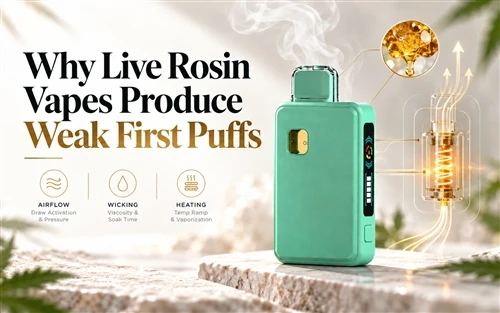
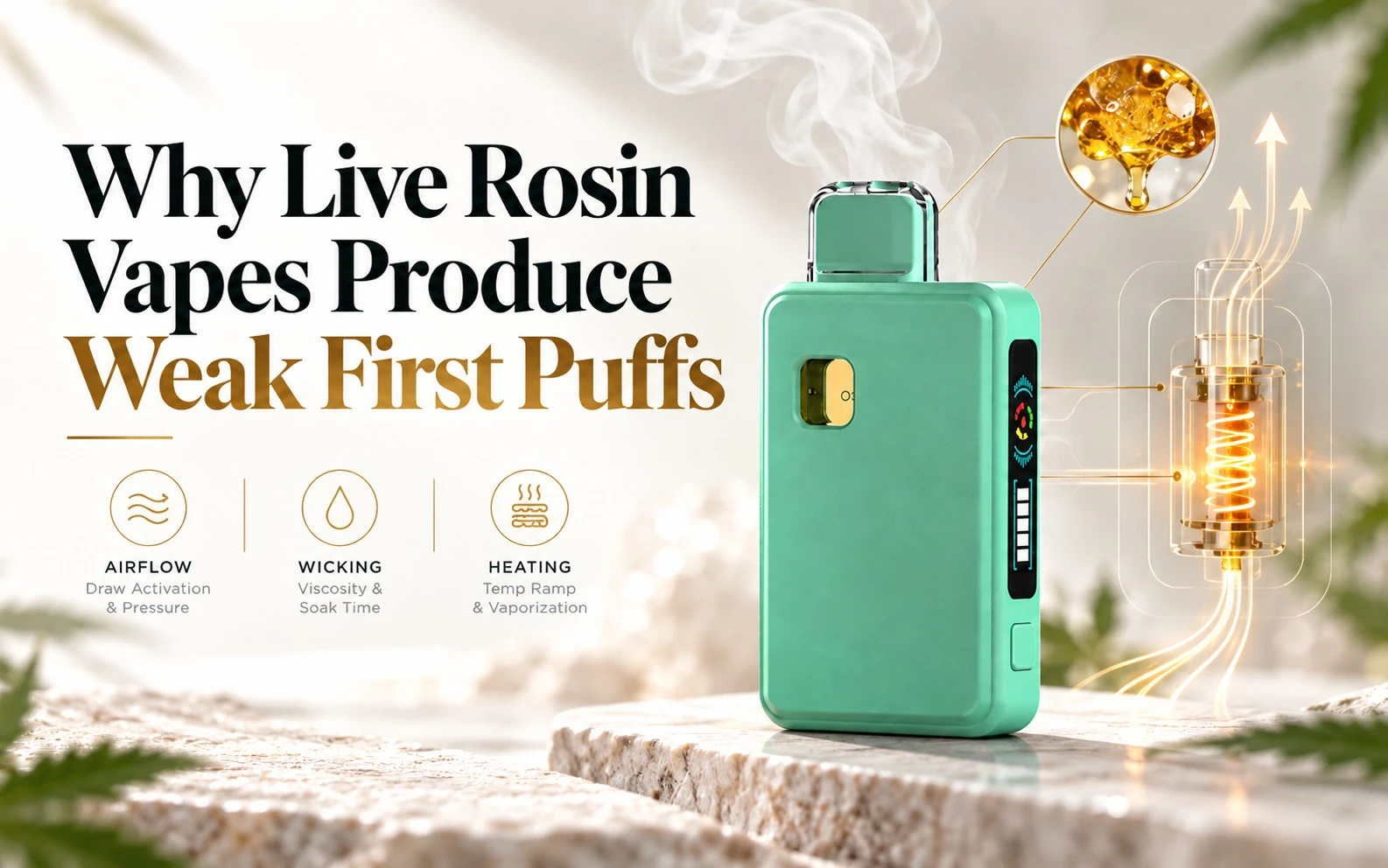
A weak first hit does not automatically mean the live rosin vape is defective. In many cases, it is a cold-start vaporization problem caused by the interaction between oil viscosity, temperature, wicking speed, ceramic heating efficiency, airflow, activation time, and power delivery. Similar factors can also contribute to broader weak vapor problems in cannabis vape hardware.
Understanding that interaction is important for cannabis brands because telling consumers to "take a few more puffs" does not solve the underlying product-experience problem. The better approach is to match the vape hardware to the actual live rosin formulation before mass production.
Why Temperature and Viscosity Make the First Puff Weak
Live rosin is fundamentally different from distillate. Without solvent extraction, it retains natural plant waxes, lipids, and a broad terpene profile that can make it significantly more viscous, especially as temperature falls.
At approximately 15°C (59°F), oil viscosity can increase dramatically and the flow rate into the ceramic core may drop by 40–60%. At around 10°C (50°F), partial crystallization may begin near intake holes, further restricting wicking.
This creates a common viscosity-wicking cascade:
High viscosity → slower oil flow → reduced oil supply to the ceramic heating zone → weak first puff or thin vapor → additional draws warm the system → vapor output improves
This explains why a live rosin vape may seem weak after sitting unused overnight, during colder weather, or after being stored in a cool environment.
For product developers, this makes cold-start performance a useful metric. It is not enough to evaluate vapor production only after the device has already been warmed by several draws.
Temperature also matters because live rosin hardware must balance vapor production with flavor preservation. Brands evaluating that balance can refer to a more detailed live rosin vape temperature guide.
How Ceramic Core Wicking Affects First-Puff Vapor
The ceramic core is at the center of live rosin vaporization. A heating element can reach the correct temperature and still produce weak vapor if oil cannot reach the active ceramic surface quickly enough.
Several problems can contribute to poor first-puff performance.
Clogged Micropores
Resinous or partially crystallized material can restrict ceramic micropores, slowing oil delivery and increasing the risk of low vapor output or burnt taste.
This is closely related to the same oil-flow and condensation mechanisms behind live rosin vape clogging, especially when thick oil, small oil inlets, and narrow vapor pathways are combined.
Improper Ceramic Porosity
Porosity is not simply a "more is better" specification. The original working range considered here is approximately 35–45%, balancing capillary action with structural integrity. Below that range, thick oil may feed too slowly; excessively high porosity can create other structural or leakage concerns.
Dry Heating Areas and Oil Wall-Hanging
When the oil level becomes low, viscous cannabis oil can remain on the tank wall rather than returning efficiently to the heating area. The ceramic core may then receive insufficient oil even though extract remains visible inside the device.
Tank material can also influence this behavior. Glass tanks can help reduce oil wall-hanging in some cannabis oil applications, although the correct material still depends on the formulation and product design.
Ceramic Size and Oil-to-Heater Contact Area
First-puff performance also depends on more than porosity.
A ceramic heating surface that is too small can have insufficient contact with thick oil, making it difficult to generate substantial vapor immediately. Increasing the effective oil-to-ceramic contact area can improve heating efficiency and vapor output without relying only on higher operating voltage.
For a deeper explanation of this relationship, see how ceramic core size affects vape performance.
This leads to an important hardware-engineering principle:
Resistance and voltage alone do not determine first-puff performance.
Ceramic dimensions, effective heating area, wicking behavior, intake design, oil viscosity, airflow, and heating duration all contribute to the result.
How Restricted Airflow Reduces Vapor Output
Airflow directly affects how generated aerosol moves through a live rosin vape and how much vapor the user perceives during a draw.
Several restrictions can weaken vapor output.
Blocked Airholes
Residue, dust, condensed extract, or mechanical restriction around the airflow path can reduce the amount of air moving through the heating chamber.
Condensate Buildup
Terpenes and vapor can condense inside the mouthpiece and airway over repeated use. As deposits accumulate, draw resistance increases and vapor delivery may gradually decrease.
Mouthpiece and Airway Geometry
An overly narrow internal airway can change pressure and airflow velocity, increasing draw resistance and reducing perceived vapor volume.
For live rosin hardware, airflow therefore needs to be designed together with the oil-feed system rather than treated as a separate specification.
That is why oil-matched hardware development considers ceramic core, intake hole, airflow, voltage, resistance, and tank structure together. Changing one parameter can affect several others.
How Voltage, Resistance, and Heat-Up Affect Live Rosin
Even a well-designed ceramic core cannot perform correctly without suitable power delivery.
Live rosin requires enough energy to initiate vaporization quickly, but excessive heat can reduce flavor quality, accelerate terpene loss, or create burnt taste. The engineering objective is therefore not maximum power-it is fast, controlled heat transfer at the oil-and-ceramic interface.
A general reference range may look like this:
|
Coil Resistance |
Typical Voltage Reference |
Power Range |
Main Risk |
|
1.0–1.5Ω (Lower Resistance) |
3.3–3.6V |
7–10W |
Too little heat can produce weak vapor |
|
1.5–2.0Ω (Standard) |
3.0–3.3V |
5–7W |
Poor matching can produce burnt taste |
|
>2.0Ω (Higher Resistance) |
Lower wattage |
Gentle heat |
Excessive repeated heating can degrade performance |
These ranges should not be treated as universal settings for every live rosin vape.
Different ceramic structures can operate effectively at very different voltages. That distinction is important because simply increasing voltage is not always the correct answer to a weak first hit. Brands that want to understand the electrical side in more detail can review how resistance affects cannabis vape hardware.
A better way to evaluate first-puff performance is as a system:
Oil flow + wicking + ceramic contact area + heat-up response + activation time + airflow
If any part of that sequence responds too slowly during a cold start, vapor output can be weak even when the nominal voltage or resistance appears acceptable.
Why Preheating Helps a Cold Live Rosin Vape
Live rosin and other thick cannabis extracts can become difficult to feed after sitting unused, particularly in cooler conditions.
Preheating helps by bringing the ceramic and nearby oil closer to an effective flow and vaporization range before the user's main draw.
A typical process is:
- Activate the device's supported preheat or button-heating function.
- Allow the ceramic to warm the nearby oil.
- Give the thick extract time to begin flowing toward the active heating surface.
- Take the primary draw once the oil-and-ceramic interface has warmed.
The exact method depends on the device. Not every vape supports the same activation sequence, so users should follow the hardware manufacturer's instructions rather than assuming every device uses a double-click or fixed preheat time.
Repeated or excessive preheating is also not desirable. Too much heat can unnecessarily expose volatile terpene compounds to elevated temperatures. Limonene, for example, is a common cannabis-associated terpene with well-characterized thermophysical and phase-change behavior documented in the NIST Chemistry WebBook. Additional reference data on its chemical and physical properties are available through PubChem.
For this reason, the better hardware strategy is not simply "add more preheat." It is to match the activation behavior and warm-up profile to the actual formulation.
Button-and-inhale activation can be especially useful for thicker oils because it gives the user or device more control over warm-up before the main draw. The difference between these activation strategies is explained further in button vs. inhale activation for cannabis vapes.
For example, the UNIVERSE Pro post-free disposable vape combines POST-FREE architecture with Button & Inhale activation and adjustable low-voltage settings, making it relevant to projects where controlled warm-up and low-temperature operation are priorities.
How ASM VAPE Matches Hardware to Live Rosin
The recurring problem behind weak first puffs is that not all cannabis oils work with the same vape hardware.
ASM VAPE approaches live rosin projects through oil-matched hardware development rather than applying a single cartridge or disposable configuration to every formulation. Brands evaluating a new project can start with ASM VAPE's best vape hardware for live rosin solutions.
Founded in 2019, ASM VAPE focuses on cannabis vape hardware and OEM/ODM development for THC/CBD brands and partners. Its capabilities include oil matching, ceramic atomization, product testing, troubleshooting, filling support, product refinement, and scalable manufacturing.
Optimized Ceramic Platforms
ASM VAPE's ceramic platforms include Unicore, Gemco, and Verve™.
Unicore is positioned specifically around Resin/Rosin applications and is widely used in POST-FREE products. Depending on the project, ceramic structure and heating surface can be selected around oil viscosity, desired vapor output, and flavor requirements.
One example is the UNICORN postless live rosin vape pen, which uses a postless structure aimed at low-temperature cannabis oil vaporization.
Low-Temperature Ceramic Heating
ASM VAPE's ceramic development focuses on:
- Faster wicking
- Low-temperature vaping
- Anti-clogging structures
- More stable vaporization
- Terpene and flavor expression
The goal is not simply to increase heat, but to move thick oil efficiently while limiting unnecessary overheating.
Airflow and Anti-Clog Design
For high-viscosity cannabis oils, intake and airflow need to work together.
ASM VAPE adjusts factors such as oil-feed geometry, airflow, ceramic platform, and tank structure according to the formulation and expected performance requirements. Better oil movement and airflow can reduce both weak vapor and clogging.
Preheat-Friendly Activation
For formulations that show slow cold-start behavior, Button & Inhale activation can provide an additional warm-up option.
The objective is to shorten the transition from a cold, viscous oil state to stable vaporization without forcing the device to operate continuously at unnecessarily high voltage.
Oil-Matched Voltage and Resistance
Voltage should be selected together with resistance, ceramic architecture, heating area, activation behavior, and oil viscosity.
ASM VAPE's OEM/ODM capabilities allow voltage and resistance to be adjusted according to oil formulation rather than relying on a universal electrical specification.
Oil-Feeding and Tank Matching
Intake hole size, airflow, ceramic structure, and tank design all influence how quickly live rosin reaches the heating surface.
For some formulations, tank material also deserves attention. Glass can help reduce oil wall-hanging in certain applications, while other projects may prioritize different structural or manufacturing requirements.
The correct hardware is therefore not defined by one specification. It is defined by how well the entire vaporization system works with the actual oil.
For brands comparing different device architectures, this broader guide to vape hardware for live rosin provides additional context on hardware selection.
Best Practices for Cannabis Brands and Distributors
Store Live Rosin Vapes Under Consistent Conditions
As a practical reference, storing devices upright at approximately 18–22°C (64–72°F) and away from direct sunlight or extreme cold can help reduce drastic changes in viscosity.
Brands should also evaluate hardware after realistic storage and rest conditions rather than testing only immediately after filling.
Give Users Clear Operating Instructions
If a product supports preheating, selectable voltage, or specific priming behavior, explain it clearly.
Good user education can reduce unnecessary complaints, but instructions should complement good hardware engineering rather than compensate for a poor oil-hardware match.
Test the Actual Formulation Before Mass Production
The most reliable way to avoid weak first puffs is to test the actual live rosin formulation with the intended hardware configuration.
That process should evaluate more than whether the device "produces vapor." It should also consider:
- Cold-start vapor output
- Oil flow and wicking
- Draw resistance
- Clogging behavior
- Burnt taste
- Flavor consistency
- Performance as oil level decreases
- Voltage and resistance matching
- Activation behavior
For cannabis brands, this is the more important lesson behind the weak-first-puff problem: a device that becomes normal after the second or third hit may still represent a product-quality issue from the consumer's perspective.
The better goal is stable performance from the beginning.
FAQ
Why does my live rosin vape produce almost no vapor on the first hit?
The most common reason is a cold-start mismatch between thick live rosin and the hardware's initial heating and wicking response. Cooler oil moves more slowly, and a short first heating cycle may not immediately bring enough extract to the ceramic surface or generate sufficient vapor.
Why does the vape work normally after two or three puffs?
Successive draws warm both the ceramic core and the nearby oil. As viscosity decreases and oil flow improves, the heating surface receives a more consistent supply, so vapor output increases.
Should I increase the voltage if my live rosin vape has a weak first puff?
Not automatically. Higher voltage can increase heat, but it can also damage flavor or contribute to burnt taste if the ceramic core and oil formulation are not designed for it. Voltage, resistance, ceramic structure, airflow, and oil viscosity should be evaluated together.
Is a POST-FREE or postless vape better for live rosin?
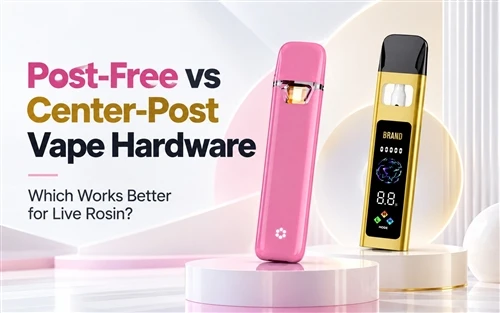
POST-FREE ceramic designs can be particularly suitable for Live Rosin and Live Resin because they can support large ceramic heating areas and lower-temperature vaporization. However, the result still depends on the ceramic platform, intake, airflow, electrical settings, and the specific oil formulation rather than the absence of a center post alone.
Can preheating completely eliminate weak first puffs?
Preheating can significantly improve cold-start behavior for thick cannabis oils, but it is not a substitute for proper hardware matching. If a device requires excessive preheating every time it is used, the oil-feed system, ceramic platform, activation strategy, or electrical configuration may need further optimization.
Conclusion
Live rosin vapes produce weak first puffs primarily because thick, temperature-sensitive oil needs time to reach the ceramic heating surface and enter an effective vaporization state. The problem is rarely caused by a single parameter: oil viscosity, wicking, ceramic contact area, airflow, activation time, resistance, and heat delivery all work together.
For cannabis brands, the solution is therefore not simply more voltage or longer preheating. It is oil-matched hardware engineering that delivers reliable cold-start vapor while preserving the flavor and terpene character that make live rosin valuable.
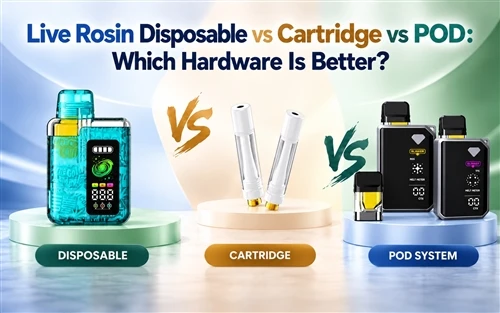
If you're developing a live rosin disposable, pod, or cartridge, ASM VAPE's cannabis vape hardware OEM/ODM solutions can help match the ceramic platform, airflow, intake, activation, voltage, resistance, and tank structure to your formulation. Contact ASM VAPE to discuss oil testing, hardware optimization, or a custom live rosin project.