

Best Vape Hardware for Distillate
Distillate vape hardware should be selected around the actual oil formulation, viscosity and target vapor performance rather than treated as a one-size-fits-all device. ASM VAPE matches ceramic heating, oil intake, airflow, voltage, resistance and tank structure to help cannabis brands build more consistent distillate products.
Whether you are developing disposable distillate vape hardware, a high-capacity AIO device or a 510 distillate cartridge, our oil-matched approach starts with your formulation and then works backward to the hardware configuration.
OIL-MATCHED HARDWARE | VERVE™ CERAMIC | VARIABLE-VOLTAGE OPTIONS | OEM / ODM
Explore Compatible Hardware Request Free Samples
Compatible Vape Hardware for Distillate Oil
The following models are primary hardware options to evaluate for distillate projects. They cover disposable distillate vape hardware, adjustable-voltage AIO devices, larger-capacity formats and 510 distillate cartridge hardware with different ceramic, resistance and activation configurations.
Final compatibility should always be validated with the customer's actual oil formulation before mass production.

OCEAN | Large Display AIO Disposable Vape
2mL / 3mL | 1.2Ω | Verve™ Ceramic
- Dimensions: 76.5H × 40.3W × 16.0D mm
- Oil Tank Capacity: 2mL / 3mL
- Battery Capacity: 280mAh
- Resistance: 1.2Ω
- Voltage Settings: 2.5V / 3.0V / 3.5V
- Housing Material: Plastic
- Ceramic Coil: Verve™
- Activation: Button & Inhale Activated
- Charging: Type-C
- Feature: Large Display
BLAST X | Smart Screen Disposable Vape
1mL / 2mL | FULL CERAMIC | 1.2Ω
- Dimensions: 108.1H × 23.8W × 12.9D mm
- Oil Tank Capacity: 1mL / 2mL
- Battery Capacity: 280mAh
- Resistance: 1.2Ω
- Voltage Settings: 2.5V / 3.0V / 3.5V
- Housing Material: Aluminum
- Ceramic Coil: Verve™
- Activation: Button & Inhale Activated
- Charging: Type-C
- Structure: Full Ceramic


PURA | High-Capacity Distillate AIO Hardware
1mL / 2mL / 3mL / 3.5mL | 1.2Ω | Large Display
- Dimensions: 77.0H × 36.0W × 14.0D mm
- Oil Tank Capacity: 1mL / 2mL / 3mL / 3.5mL
- Battery Capacity: 280mAh
- Resistance: 1.2Ω
- Voltage Settings: 2.5V / 3.0V / 3.5V
- Housing Material: Plastic
- Ceramic Coil: Verve™
- Activation: Button & Inhale Activated
- Charging: Type-C
- Feature: Large Display
PEBBLE | Compact Distillate Disposable Vape
1mL / 2mL | 1.2Ω | 3.5V
- Dimensions: 61.6H × 36.1W × 15.0D mm
- Oil Tank Capacity: 1mL / 2mL
- Battery Capacity: 280mAh
- Resistance: 1.2Ω
- Voltage: 3.5V
- Housing Material: Plastic
- Ceramic Coil: Verve™
- Activation: Inhale Activated
- Charging: Type-C
- Capacity Concept: 1 Tank, 2 Volumes

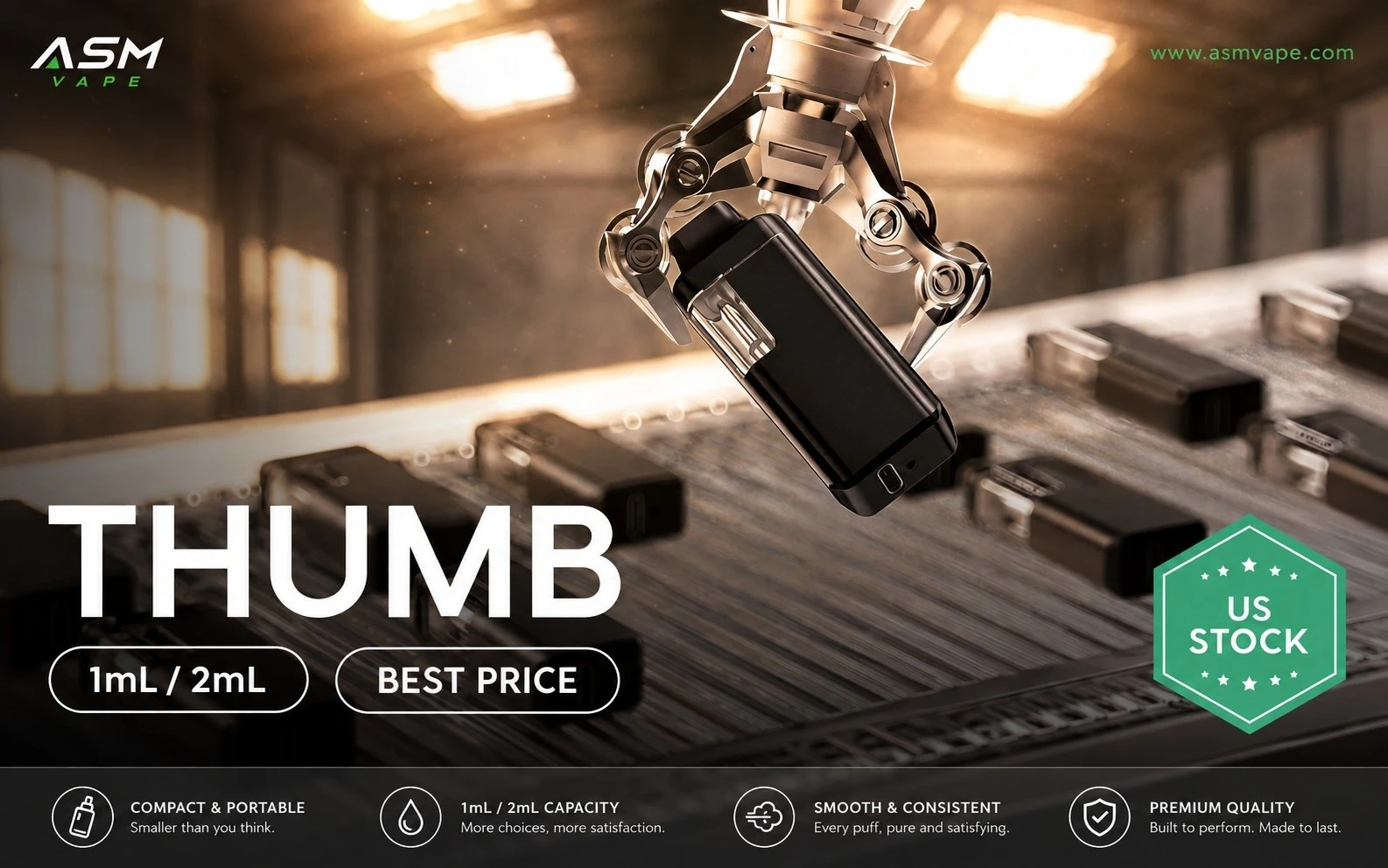
THUMB | Budget Center-Post Disposable Vape
1mL / 2mL | 1.2Ω | 3.5V
- Dimensions: 66.5H × 24.4W × 13.9D mm
- Oil Tank Capacity: 1mL / 2mL
- Battery Capacity: 260mAh
- Resistance: 1.2Ω
- Voltage: 3.5V
- Housing Material: Plastic
- Ceramic Coil: Verve™
- Activation: Inhale Activated
- Charging: Type-C
- Positioning: Cost-Effective Hardware
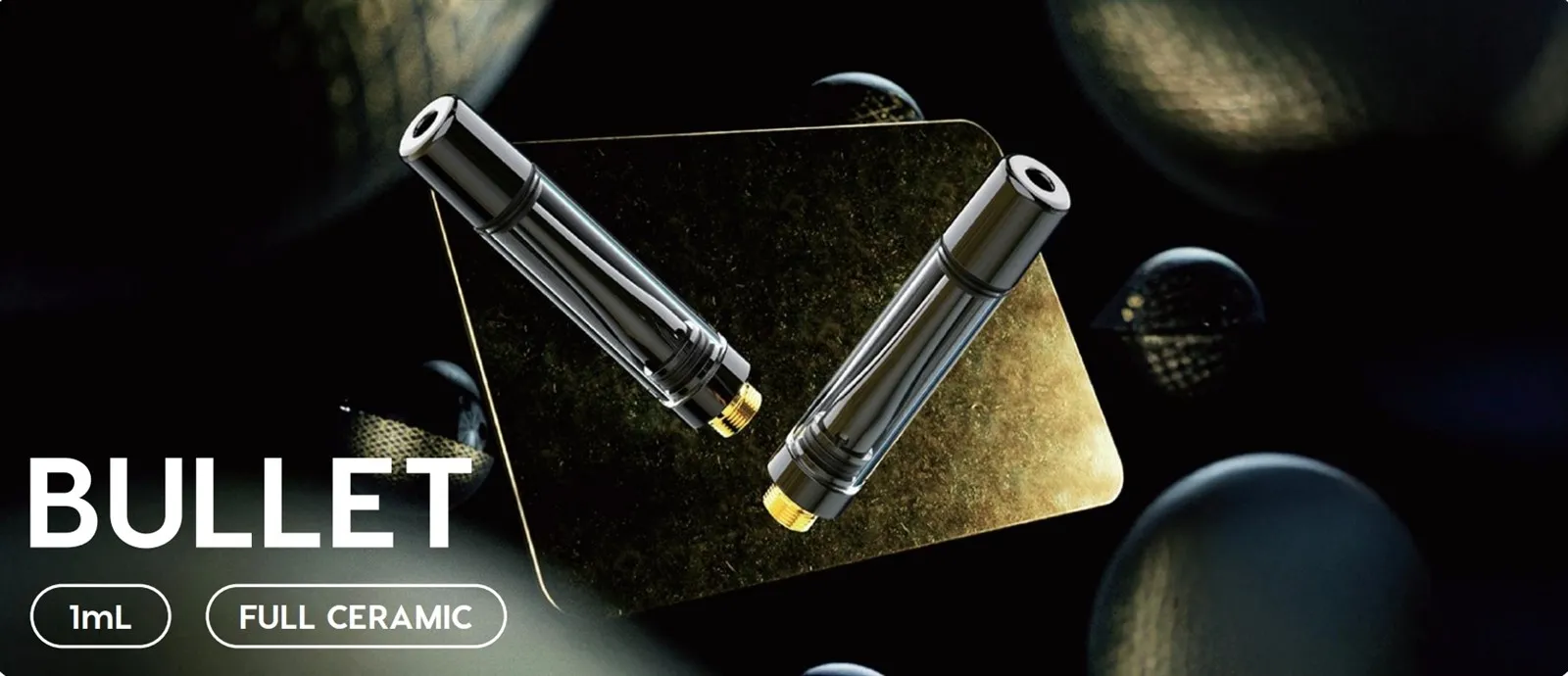
BULLET | 1mL Full Ceramic Vape Cartridge
1mL | Glass Tank | Ceramic Central Post
- Dimensions: φ11.0 × 56.0H mm
- Oil Tank Capacity: 1mL
- Format: 510 Cartridge
- Resistance: 1.4Ω
- Tank Material: Glass
- Central Post: Ceramic
- Mouthpiece: Ceramic
- Ceramic Coil: Verve™
Need a different capacity, form factor or electrical configuration? ASM VAPE can evaluate other existing platforms or develop an OEM/ODM configuration around your distillate formulation.
More about our All-in-One Disposables
What Is Distillate Oil?
Distillate is one of the major cannabis oil categories used in vape products. For hardware selection, the most important point is that distillate is not one fixed hardware condition. Different formulations can behave differently depending on viscosity, additives, terpene content, storage conditions and the vapor experience the brand wants to create.
That means a cannabis brand should not choose distillate cartridge hardware or disposable distillate vape hardware by capacity and appearance alone. The oil must move toward the heating area, saturate the ceramic correctly, receive sufficient and stable heat, and work together with the device airflow and activation system.
The practical question is not simply "Which device is for distillate?" It is "Which hardware configuration is matched to this distillate?"
What Makes the Best Vape Hardware for Distillate?
The best vape hardware for distillate is not determined by a single specification. Oil viscosity, ceramic heating, resistance, voltage, oil intake, airflow, activation and tank structure need to work together as one system. Final hardware selection should therefore be matched and tested with the actual formulation.
Oil Viscosity and Flow Behavior
Distillate formulations can vary in viscosity, and thicker THC oils may move more slowly after sitting for long periods or when exposed to lower temperatures. The hardware needs an oil pathway that allows the formulation to reach the heating area consistently throughout the expected use cycle.
Ceramic Heating and Contact Area
Ceramic coil design is an important part of distillate vape hardware. The size and structure of the ceramic heating area affect oil contact, heating efficiency and vapor production. A larger effective contact area can help improve heating efficiency when resistance, voltage and oil flow are matched correctly.
Oil-Matched Resistance and Voltage
There is no single resistance or voltage that is automatically best for every distillate. Resistance, voltage, ceramic structure and viscosity should be evaluated together. The objective is to provide enough controlled heat for stable vaporization without treating higher voltage or lower resistance as universally better.
Several ASM VAPE Verve™ products provide 1.2Ω ceramic configurations with fixed or adjustable output, while other models use 1.4Ω systems. These are hardware configurations rather than universal oil recommendations, so final settings should be validated with the actual formulation.
Oil Intake and Wicking
The oil intake structure needs to move distillate toward the ceramic at a rate that matches the device's heating demand. If oil feeds too slowly compared with the heating cycle, vapor output can become inconsistent and the heating area may not remain fully supplied.
Airflow That Works With Oil Flow
Airflow and oil movement should be treated as connected parameters. A restricted airflow path can create a tight draw, while oil-path and airflow mismatches can contribute to clogging, weak vapor and inconsistent performance over time.
Activation and Preheating Control
High-viscosity THC oil can become harder to vaporize after long periods without use or in lower temperatures. Button activation or additional heating control can give the ceramic more time to warm the oil before the main draw. This is one reason some ASM VAPE distillate hardware platforms combine button and inhale activation.
Tank Structure and Material
Tank geometry and material influence how oil reaches the heating area as the fill level decreases. Some viscous oils can remain on the tank wall instead of returning to the ceramic, leading to unused oil. Glass-tank cartridge formats can also be evaluated when oil visibility, material stability or low-oil behavior are priorities.
In short, the best distillate vape hardware is the hardware that matches oil viscosity, ceramic heating, electrical output, oil flow and airflow as a complete system.
Common Distillate Vape Hardware Compatibility Problems
Weak or No Vapor on the First Draw
When THC oil is relatively viscous, cold or has been sitting for a long period, it may not respond to the heating surface quickly enough during a short inhale-activated cycle. Additional heating control, suitable ceramic contact area and better oil flow can help address the underlying mismatch.
Clogging or Restricted Airflow
Clogging is often a system-level compatibility issue rather than a problem caused by one component alone. Oil viscosity, intake geometry, heating behavior and airflow all influence how smoothly the device draws throughout its use cycle.
Burnt Taste
If the ceramic heating area receives heat faster than the oil can replenish it, the user may experience an overheated or burnt taste. Voltage, resistance, ceramic structure and oil-flow rate should therefore be balanced together.
Oil Hanging on the Tank Wall
When only a small amount of oil remains, some viscous formulations may stay on the tank wall instead of moving back toward the heating area. Tank geometry, tank material and intake position should therefore be considered when evaluating residual oil and end-of-fill performance.
Inconsistent Vapor Output
A device may perform differently on the first draw, during repeated use and when the tank reaches a low oil level. Consistent distillate performance depends on maintaining a workable balance between oil movement, ceramic saturation, heat delivery and airflow.
Oil Waste and After-Sales Problems
For cannabis brands, poor hardware compatibility becomes more than a vaping issue. Unused oil, clogging, leaking, weak vapor and inconsistent performance can increase consumer complaints, returns and after-sales costs.
How ASM VAPE Matches Vape Hardware to Distillate
Not all oils work with the same vape hardware.
1. Start With the Distillate Formulation
ASM VAPE starts with the oil type, formulation, viscosity and target performance. Instead of forcing the oil into a generic device, we use these variables to establish the starting direction for ceramic heating, oil intake, airflow, voltage, resistance and tank structure.
2. Select the Hardware Architecture
The next step is to select the appropriate product format and capacity. Depending on the brand program, this may be an all-in-one disposable, a larger-capacity device, a pod platform or distillate cartridge hardware paired with a 510 battery.
3. Match the Ceramic and Heating Configuration
Ceramic architecture, heating area, resistance and voltage are evaluated as a connected heating system. The objective is to provide sufficient thermal efficiency for the formulation while maintaining stable oil supply to the heating area.
4. Configure Oil Intake, Airflow and Activation
Oil movement and airflow are evaluated together with the activation method. Depending on viscosity and target experience, the project may use inhale activation, button activation or button + inhale control to create a more appropriate heating and draw profile.
5. Test, Troubleshoot and Refine
The selected hardware should then be tested with the customer's actual oil. ASM VAPE supports product testing, filling support, troubleshooting and product refinement so that issues such as clogging, weak vapor, poor airflow, burnt taste and oil waste can be evaluated before scale-up.
6. Move Into OEM / ODM and Scalable Production
Once the oil-hardware direction is confirmed, the project can move into private label customization or deeper ODM development. Options can include logo, colors, surface finishes, screen UI, packaging, materials, exterior design, functions and mold development.
Oil-Matched Development Flow
Distillate / Formulation → Hardware Architecture → Ceramic + Oil Intake → Voltage + Resistance + Airflow → Testing + Refinement → OEM/ODM Scale
Distillate Vape Hardware Selection Guide
When comparing vape hardware for distillate oil, use the following questions as a practical starting point. The goal is not to find one universal "best" specification, but to identify the variables that should be matched together for your formulation.
|
Consider |
What to Evaluate |
|
Oil Formulation |
What is the distillate formulation and how does it behave inside vape hardware? |
|
Viscosity |
How does the oil flow at room temperature and after storage or exposure to lower temperatures? |
|
Capacity |
Does the project require 0.5mL, 1mL, 2mL, 3mL or another capacity? |
|
Product Format |
Disposable AIO, pod system or 510 distillate cartridge? |
|
Ceramic Platform |
What ceramic architecture and heating area fit the oil and desired vapor output? |
|
Resistance |
How does the resistance work with the selected ceramic and voltage configuration? |
|
Voltage |
Does the device provide sufficient controlled heat without unnecessarily overheating the formulation? |
|
Activation |
Is inhale activation sufficient or would button + inhale control provide more flexibility? |
|
Tank Structure |
How will the oil reach the heating area throughout the full fill volume? |
|
Airflow |
What draw resistance and vapor delivery does the brand want? |
|
Customization |
Does the project require custom logo, colors, surface finish, screen UI, packaging or mold development? |
Test Your Distillate Before Mass Production
A hardware specification sheet can narrow the options, but the actual oil remains the most important validation step. A device that works well with one distillate formulation may behave differently with another, which is why ASM VAPE supports testing and refinement before volume production.
Oil Compatibility Testing
Selected hardware can be evaluated with the customer's own formulation to observe vapor output, oil movement and overall compatibility.
Filling Support
Filling is part of the hardware-use cycle. Testing how the oil behaves during and after filling can help identify issues before the project reaches large-scale production.
Vaporization and Airflow Evaluation
Testing can evaluate vapor consistency, draw behavior, oil supply to the ceramic and whether operating parameters need to be refined.
Clogging, Leakage and Low-Oil Observation
Compatibility should be evaluated across more than a few early puffs. ASM VAPE can help troubleshoot performance through filling, storage and extended use, including the low-oil stage.
California Product Laboratory Support
For U.S. brand partners, ASM VAPE's California product laboratory can support product testing, filling support, troubleshooting, product refinement and technical collaboration.
Request Samples for Oil Testing
Why Cannabis Brands Work With ASM VAPE
ASM VAPE is a dedicated cannabis vape hardware manufacturer and engineering partner supporting THC/CBD brands, distributors and OEM/ODM partners. Our projects can move from oil-matched hardware selection to testing, customization and scalable manufacturing within one development system.
Built for B2B Cannabis Hardware Programs
60+ Engineers | 25 Professional Assembly Lines | 100,000 Units Daily Capacity | 100+ Brands Served
GMP-Certified Factory | California Product Laboratory | OEM / ODM Customization
Cannabis-Focused Hardware Development
ASM VAPE focuses on cannabis vape hardware for THC/CBD brands rather than treating oil products as an extension of generic nicotine hardware.
Oil-Matched Engineering
Hardware can be selected and configured around oil type, viscosity, capacity, ceramic heating, voltage, resistance, airflow and target performance.
OEM / ODM Customization
Private label projects can include logo, colors, finishes, display UI and packaging, while deeper ODM programs can cover materials, appearance, functions, mold development and custom packaging.
Scalable Manufacturing
With multiple professional assembly lines and scalable daily production capacity, ASM VAPE supports both growing cannabis brands and larger-volume hardware programs.
Match Your Distillate to the Right Hardware
Find a starting hardware platform for your distillate formulation.
Tell us your oil formulation, viscosity, target capacity, product format and desired vapor performance. ASM VAPE can recommend compatible hardware, provide samples, support oil testing and adjust key hardware parameters for OEM/ODM production.
Your oil should define the hardware - not the other way around.
Get Free Samples Talk to an Engineer
FAQs
Q1: What vape hardware is best for distillate oil?
A: The best vape hardware for distillate depends on the actual formulation, viscosity, target capacity and desired vapor performance. Ceramic heating, oil intake, airflow, resistance, voltage, activation and tank structure should be evaluated together, and final compatibility should be validated with the customer's actual oil.
Q2: Does high-viscosity distillate require different vape hardware?
A: It can. Higher-viscosity oil may move more slowly toward the heating area, especially after storage or in lower temperatures. The hardware may need an appropriate oil path, ceramic heating area and heat-delivery profile to support stable oil flow and vaporization.
Q3: What resistance is suitable for distillate vape hardware?
A: There is no single resistance that is suitable for every distillate formulation. Resistance should be matched with voltage, ceramic structure, oil viscosity and desired vapor output. ASM VAPE therefore treats resistance as one part of an oil-matched hardware configuration rather than a universal number.
Q4: What voltage should be used for distillate oil?
A: Voltage should be selected together with resistance, ceramic design and oil behavior. Distillate projects may require sufficient heat delivery for the formulation, but higher voltage is not automatically better. The final setting should be validated with the specific oil and hardware configuration.
Q5: Are ceramic coils suitable for distillate oil?
A: Ceramic heating is widely used across ASM VAPE cannabis hardware platforms. For distillate, ceramic size, architecture and oil-contact area should be matched with oil intake, resistance, voltage and target vapor performance.
Q6: Can distillate be used in a 510 cartridge?
A: Yes. Distillate can be used with suitable 510 cartridge hardware when the cartridge and battery configuration are matched to the oil. ASM VAPE offers cartridge formats including ceramic and glass-tank structures that can be evaluated with the customer's formulation.
Q7: What causes clogging in distillate vape hardware?
A: Clogging can be related to oil viscosity, oil-path design, airflow, temperature and heating behavior. Instead of treating clogging as a single-component problem, oil intake, airflow, ceramic heating and the broader hardware structure should be evaluated together.
Q8: Why does a distillate vape sometimes produce weak vapor on the first draw?
A: With viscous THC oil, long periods without use or lower temperatures can reduce oil mobility. If the device relies on a short inhale-activation cycle, the first draw may not provide enough heating time. Button activation or additional heating control can provide more flexibility for suitable formulations.
Q9: How can hardware reduce leftover oil in the tank?
A: Tank geometry, material and oil-intake position influence how the remaining oil returns to the heating area. Some viscous oils can remain on the tank wall at low fill levels, so tank structure should be considered when evaluating oil utilization and end-of-fill performance.
Q10: Can ASM VAPE test my distillate before mass production?
A: Yes. ASM VAPE supports product testing, filling support, troubleshooting and product refinement. For U.S. brand partners, our California product laboratory can also support testing, filling and technical collaboration before the project moves into scalable production.
Q11: Can ASM VAPE customize distillate vape hardware for my oil and brand?
A: Yes. ASM VAPE supports oil-based customization around capacity, heating core, voltage and resistance together with private label options such as logo, colors, finishes, display UI and packaging. Deeper ODM projects can also include materials, exterior design, functions and mold development.
Q12: Does ASM VAPE manufacture both disposable and cartridge hardware for distillate?
A: Yes. ASM VAPE's product portfolio includes all-in-one disposable hardware, pod systems, cartridges and 510 batteries. The final product format and configuration can be selected according to the oil formulation, capacity requirement and target user experience.