There are many possible reasons why a disposable vape doesn't produce vapor - yet most users aren't fully aware of them. According to our market research, this is a very common problem: many users notice that the indicator light on their disposable vape turns on, but no vapor comes out, or only a very small amount of vapor is produced.
So what exactly causes this issue?
Below, we'll explain the most common reasons why a disposable vape is not producing vapor, and show you how to fix each one effectively.

Five Common Reasons Why a Disposable Vape Is Not Producing Vapor
1. Thick THC Oil and Low Temperature
If you're using a thicker THC oil, in low-temperature environments, leaving the device unused for a long time may cause the THC oil in the tank to solidify, preventing it from being vaporized immediately. Additionally, many disposable vape devices use inhale-activated mechanisms with very short heating times, which can result in no vapor or minimal vapor on the first puff. Taking a few more puffs typically restores normal vapor production.
Solutions:
- Warm the device in your hand or let it rest at room temperature for 10–20 minutes.
- If your vape supports button-activated + inhale dual activation, press the button once or twice to preheat before inhaling.
- For inhale-only devices, try taking several slow, deep puffs to extend the heating time and get vapor flowing again.
2. Oil Sticking to the Cartridge Walls
THC oil may stick to the walls of the tank, and when only a small amount of THC oil remains, this "wall-hanging" effect can prevent the oil from reaching the heating coil at the bottom of the tank, resulting in poor vaporization or no vapor production at all.
Solutions:
- Gently invert or shake the device to help oil flow toward the ceramic core.
- It is generally recommended to use a glass tank, which can significantly reduce the issue of THC oil sticking to the walls.
- Avoid leaving the device in a horizontal position for long periods.
3. Coil Size and Resistance Mismatch
If the ceramic core is too small or the coil resistance is too high, it may not generate enough heat to vaporize dense THC oil. The device might light up but fail to produce vapor.
Solutions:
- Choose devices with a larger ceramic core - larger surface area improves heating efficiency.
- Match resistance and voltage to your oil formulation (ideal working range: 1.0Ω or lower, 3.0–3.5V output).
- Work with a professional hardware manufacturer that can customize the oil-to-coil parameters for your formula.
4. Airflow Blockage or Condensation Build-Up
Airflow is essential for vapor production. Condensation, leaked oil, or debris can clog the mouthpiece or air channel, restricting suction and preventing vapor from exiting.
Solutions:
- Clean the mouthpiece and airflow holes with a soft tissue or cotton swab.
- Blow gently through the mouthpiece, then lightly draw to clear residual oil.
- Avoid using sharp tools that might damage seals or the ceramic structure.
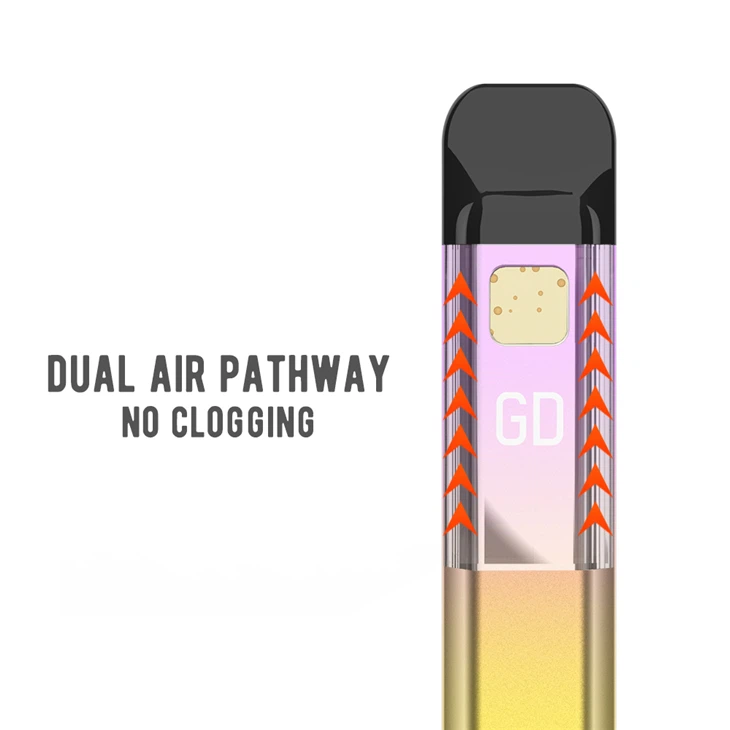
- For long-term reliability, choose devices with dual-airway, anti-condensation design.
5. Battery or Activation Issues
Disposable vapes rely on compact, built-in batteries. Over time or during transport, connections may loosen or discharge.
Solutions:
- If rechargeable, charge for 5–10 minutes using a Type-C cable.
- Ensure no protective stickers or insulators remain on the airflow sensor or bottom contact.
- If there's still no response (no light, no sound, no heat), the device may have an internal defect and should be replaced.
Below is a table summarizing the most common causes and their corresponding solutions:
|
Cause |
Typical Symptoms |
Solutions |
|
1. THC oil thickens or solidifies in low temperature |
Normal airflow but little or no vapor; small amount on the first puff and recovers after a few draws |
THC oil becomes more viscous at low temperatures, causing delayed oil flow. Let the device sit at room temperature for 10–20 minutes or warm it in your hand. If your vape has a button preheat function, press it for 1–2 seconds before inhaling. For inhale-activated types, take several long or deep puffs to help heat up the coil. |
|
2. Low oil level or oil sticking to cartridge walls |
Oil residue on the walls but dry coil area; indicator light is on but no vapor |
Thick oil tends to cling to cartridge walls, especially when oil levels are low, preventing contact with the heating core. Use glass cartridges or materials with higher surface energy to reduce sticking. If the oil level is low, gently invert the device for a few seconds to let the oil reach the core. |
|
3. Airflow or airway blockage |
Difficult to draw or heavy resistance; indicator light on but no vapor |
Caused by condensation, debris, or oil drops blocking the airway. Wipe the mouthpiece and air holes with a tissue, blow gently, then take a short reverse puff. Avoid using metal needles to poke the airway. |
|
4. Battery drained or poor connection |
No light or sound, or light on but very little vapor |
For rechargeable types, charge via Type-C for 5–10 minutes. Lightly tap the device bottom to restore contact. If the issue persists, the battery may have degraded or be damaged. |
|
5. Coil flooded (oil oversaturation) |
Gurgling sound, slight oil leakage at mouthpiece |
Let the device stand upright for several minutes to allow excess oil to settle, or gently flick it upside down once to remove trapped oil. |
|
6. Inhalation strength or technique issue |
Light turns on but no vapor |
Take slow and steady puffs lasting 2–4 seconds; make sure your fingers are not covering the air inlets. |
|
7. Storage or transportation damage |
Works intermittently; stops working after moisture exposure or heat |
Avoid high temperature, humidity, or direct sunlight; always store the device upright. |
How to Prevent Vapor Production Issues
- Store your filled disposable vape in a cool, dry place (15–25°C) - avoid both low and high temperatures.
- Keep the vape upright whenever possible to prevent oil overflow or leakage.
- Use the device regularly or press the activation button occasionally to heat the coil and keep the oil flowing, preventing it from solidifying.
- Choose high-quality disposable vapes with features such as preheat mode, constant voltage control, and dual activation for more stable vapor performance.
- Work with a trusted disposable vape manufacturer to ensure your device delivers reliable vaporization and minimizes the risk of hardware-related issues.
ASM VAPE is a professional THC vape hardware manufacturer, providing reliable disposable vape devices for cannabis brands worldwide. Our disposable vapes use high-quality ceramic heating cores, ensuring rich vapor from the very first puff. All oil tanks are made from glass or corrosion-resistant PCTG materials, effectively preventing leakage and oil sticking.
Contact us today, and let our experts help you match your oil formulation with the perfect hardware solution. Email: William@asmoorvape.com
![How to Choose Vape Hardware for Delta 9 Oil [2026 Guide]](/uploads/43868/info/n20260923113103fe52e.jpg)