Cannabis vape is no longer just about the oil. According to California Department of Cannabis Control data, licensed vape sales grew from roughly USD 889 million in 2020 to about USD 1.43 billion in 2023, and by mid-2025 vape had overtaken flower as the state's largest licensed cannabis category. As the category matures, cannabis vape hardware decisions - particularly AIO disposable vs 510 cartridges - increasingly determine whether a product succeeds or fails on the shelf.
The choice is not abstract. It shapes your unit economics, branding surface, cannabis oil compatibility, and your consumer's first puff. For THC and CBD brands developing a new vape product, understanding the differences between an AIO cannabis vape and a 510 vape cartridge is an important part of hardware selection.

What Are AIO Disposables and 510 Cartridges?
Before comparing the two, it helps to define them clearly - both for product development teams and for understanding how each type of cannabis vape hardware fits into a brand's product strategy.
AIO Disposable Vape Pens
An AIO (All-in-One) disposable is a self-contained vape device where the battery, heating element, and oil chamber are integrated into a single unit. The consumer uses it until the oil is depleted, then discards or, in newer rechargeable models, returns it. There is no separate battery to purchase and no threading to screw together. The form factor is typically slim, pen-shaped, or box-style, and the entire exterior can serve as brandable surface area.
Modern AIO cannabis vapes have evolved well beyond the early single-use plastic tube. Current-generation devices often feature rechargeable batteries via USB-C, ceramic heating cores, adjustable voltage, preheat functions, and even LED screens for oil-level and battery indication.
Postless designs - where the oil chamber does not have a traditional metal center post passing through it - have also become an important option for premium cannabis vape hardware, helping reduce direct metal contact with the oil while allowing the heating structure, airflow, and oil path to be engineered as an integrated system.
510-Thread Cartridges
The 510 cartridge is a standardized oil vessel that screws onto a 510-thread battery through a universal screw connection. The cartridge itself contains the heating element, typically a ceramic wick or coil, and the cannabis oil; the battery is a separate, reusable component that the consumer buys once and pairs with multiple cartridges over time.
This separation gives the 510 cartridge its defining characteristic: interoperability. A consumer can pair cartridges and compatible batteries from different brands. For cannabis brands, this means the cartridge is your product, but the battery ecosystem functions as shared infrastructure.
|
Dimension |
AIO Disposable |
510 Cartridge |
|
Form factor |
Integrated single unit |
Cartridge + separate battery |
|
Battery |
Built-in, often rechargeable |
Separate, reusable 510-thread battery |
|
Consumer setup |
Zero - draw-activated out of box |
Screw cartridge onto battery |
|
Branding surface |
Entire device exterior |
Cartridge body + battery if branded |
|
Typical oil capacity |
0.5ml–2ml |
0.5ml–1ml standard |
|
Per-unit cost |
Higher, includes battery |
Lower, cartridge only |
|
Consumer repeat purchase |
Entire device |
Cartridge only, battery retained |
|
Ecosystem maturity |
Brand-specific |
Universal 510 standard |
The distinction matters because it drives nearly every downstream decision - from how you price your SKU to how your consumer experiences the product on day one.
AIO Disposable vs 510 Cartridge: Key Advantages of Each Format
AIO Disposables: Convenience and Brand Control
AIO disposables win on two fronts that matter disproportionately in cannabis retail: consumer friction and brand presentation.
The consumer experience is as simple as it gets. There is no separate battery to charge, no cartridge to thread on, and little learning curve. For dispensary staff, this can mean faster checkout and fewer "how do I use this?" conversations. For brands, the entire device becomes a branding canvas - including custom colors, prints, tactile finishes, surface treatments, and differentiated form factors that a standard 510 cartridge cannot easily match.
Rechargeable AIOs have also closed the gap on one historical weakness of disposable devices: battery life. Early single-use AIOs sometimes died before the oil was finished, especially with thicker oils that required more power. Rechargeable designs with USB-C ports addressed much of this limitation, and rechargeable AIO hardware has become increasingly common in premium cannabis vape products.
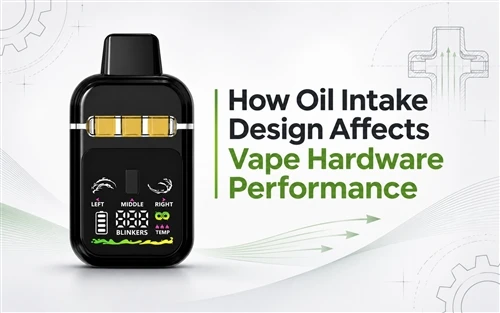
AIOs can also offer an advantage when working with high-viscosity cannabis oils such as live resin and live rosin. Because the battery, heating element, airflow, resistance, voltage, intake structure, and oil-delivery path can be engineered as one system, a cannabis vape hardware manufacturer can tune the complete device around a specific oil formulation rather than designing a cartridge that may later be paired with an unknown third-party battery.
For example, a postless live rosin vape pen can be developed around the requirements of thicker extracts while allowing the heating system and airflow to function as part of a matched hardware architecture.
The trade-off is cost. Every AIO unit includes a battery, charging circuit, and device housing, so the per-unit hardware cost is generally higher than a cartridge alone. For premium positioning, that may be acceptable. For high-volume, price-sensitive retail, it can place more pressure on margins.
510 Cartridges: Flexibility and Established Infrastructure
510 cartridges win on unit economics and ecosystem leverage.
The cartridge is a smaller, simpler component - no integrated battery, no charging port, and no full device housing. This keeps per-unit hardware cost lower, which matters for brands running high-volume distillate oil or CBD lines where price competition is intense.
The consumer buys one battery and then repurchases only cartridges, which can lower the repeat-purchase barrier.
The 510 standard also gives brands access to a mature and competitive hardware supply chain. A wide range of cartridges and 510 batteries is available, giving brands significant sourcing flexibility.
For brands evaluating compatibility, voltage, materials, and cartridge structure, a more detailed guide on how to choose 510 cannabis vape cartridge hardware can help clarify the technical considerations behind the format.
Reputable manufacturers typically maintain established quality-control and hardware testing procedures, while regulated cannabis products may also be subject to jurisdiction-specific cannabis product testing and laboratory requirements.
The weakness of 510 is fragmentation. The cartridge and battery may come from different sources, so performance depends on how well they pair. A cartridge designed around a particular operating voltage may underperform or overheat oil when paired with a variable-voltage battery set outside its intended range.
Airflow, draw resistance, and heat-up time can also vary depending on the battery the consumer happens to own. In other words, the brand controls the cartridge but does not always control the complete vaping experience.
For brands targeting experienced consumers who already own a battery, the 510 cartridge can be highly efficient. For brands targeting new or casual consumers, the same fragmentation can become a barrier.
How Cannabis Oil Compatibility Affects Hardware Choice
Why Oil Viscosity Determines Hardware Choice
Oil viscosity - how thick or thin the extract is - is one of the most underappreciated factors in cannabis vape hardware selection. Distillate, live resin, live rosin, and THCA extracts span a wide viscosity range, and each can demand different heating, airflow, oil intake, and wicking characteristics from the hardware.
Traditional ceramic cores can struggle with thicker oils. Insufficient oil supply to the heating zone may contribute to dry hits, burnt taste, clogging, and inconsistent vapor production. Thinner oils can create the opposite problem by flowing too quickly and increasing leakage risk.
There is therefore no universal "best cannabis vape hardware." The right choice depends on matching the oil-delivery architecture, ceramic heating technology, airflow, voltage, and resistance to the specific cannabis oil formulation.
|
Oil Type |
Typical Viscosity |
Hardware Challenge |
Recommended Format |
|
Distillate |
Low to medium |
Over-wicking, leakage risk |
510 cartridge or AIO |
|
Live Resin |
Medium to high |
Slow wicking, clogging |
AIO with tuned system |
|
Live Rosin |
High |
Very slow wicking, dry hits |
AIO with advanced ceramic core |
|
THCA / Sauce |
Very high |
Extreme wicking difficulty |
AIO with 3D porous ceramic |
For brands developing live resin vape hardware, live rosin vape hardware, or hardware for other high-viscosity cannabis oils, testing the actual formulation with the intended device is essential before mass production.
Ceramic Heating Technology: The Common Ground
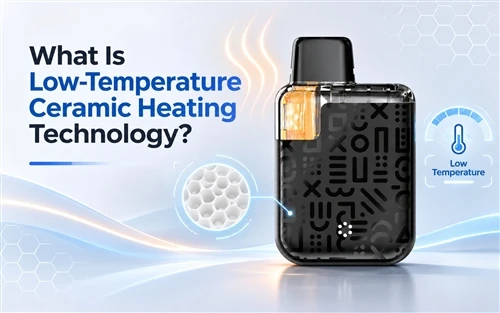
Regardless of format, ceramic heating has become widely used in both AIO disposables and 510 cartridges. The shift from traditional cotton-wick coils toward ceramic heating elements has been driven by thermal stability, consistent flavor delivery, and the need to improve performance with high-viscosity cannabis extracts.
Brands comparing different heating approaches may also want to understand the differences between ceramic and cotton coils for thick cannabis oil.
According to industry market data, the ceramic coil atomizer market stood at approximately USD 450 million in 2025 and is projected to reach around USD 779 million by 2032, representing a CAGR of about 8.2%. Porous ceramic coils accounted for roughly 65% of the market, reflecting the growing role of high-purity materials, chemical stability, heat resistance, and controlled oil delivery in modern vape hardware.
Within ceramic heating technology, several advancements are reshaping both AIO and cartridge performance:
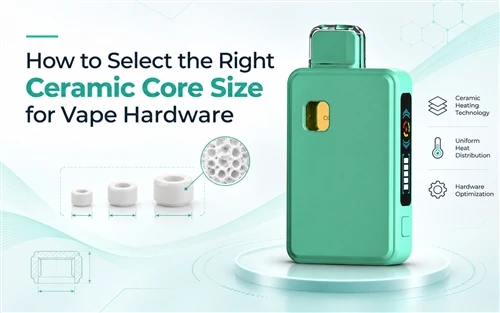
- 3D porous ceramic cores create interconnected internal oil pathways, allowing oil to penetrate and distribute more evenly across different viscosities, from standard distillate to thicker live rosin.
- Mesh ceramic coils can improve heating uniformity and flavor consistency while reducing dry-hit and burning risks in premium AIO disposables.
- Dual ceramic coil architectures provide greater heating surface area and can support faster atomization and stronger vapor output in higher-performance devices.
- Laser-formed ceramic micro-channels can help guide oil toward the heating zone and improve consistency across different cannabis oil formulations.
These advancements matter because they directly target the failure modes - clogging, leakage, dry hits, weak vapor, and inconsistent flavor - that can quickly damage consumer trust in a cannabis brand.
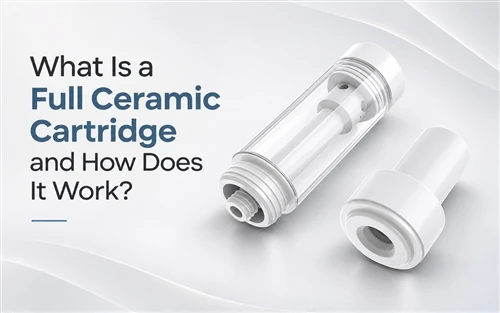
A 1mL full ceramic vape cartridge is one example of how ceramic materials can be integrated beyond the heating core itself, including the cartridge structure and oil-contact components.
How Hardware Materials and Metal Contact Affect Cannabis Vape Performance
A growing differentiator in premium cannabis vape hardware is the reduction or elimination of unnecessary metal contact with the oil. Hardware structures that use glass and ceramic in key oil-contact areas are designed to minimize interaction with cannabis formulations and support cleaner, more consistent oil storage and vaporization.
This is not merely a marketing consideration. Research on aerosols from disposable vaping devices has detected metal-containing particles including chromium, nickel, iron, lead, and zinc. The CDC also notes that e-cigarette aerosol can contain metals such as nickel, tin, and lead.
That evidence relates primarily to nicotine e-cigarettes rather than cannabis devices, so it should not be directly generalized to all cannabis vape products. However, it highlights why material selection, oil-contact surfaces, ceramic components, and vapor-path design deserve careful attention during cannabis hardware development.
On the regulatory side, the U.S. FDA's Premarket Tobacco Product Application (PMTA) process applies to tobacco products and includes extensive product and scientific documentation requirements.
Cannabis products operate under different regulatory frameworks, but the broader takeaway for brands is still relevant: choose a cannabis vape hardware supplier with established material controls, testing procedures, traceability, and technical documentation rather than selecting hardware solely on price.
How to Choose Between an AIO Disposable and a 510 Cartridge
Key Factors to Evaluate
The AIO disposable vs 510 cartridge decision should be driven by your product strategy rather than by what is currently trending. The factors below are the ones that most consistently affect product fit.
|
Decision Factor |
Choose AIO Disposable When... |
Choose 510 Cartridge When... |
|
Target consumer |
New or casual users; gift/share use |
Experienced users with an existing battery |
|
Oil type |
Live resin, live rosin, THCA, premium extracts |
Standard distillate, CBD, high-volume lines |
|
Brand positioning |
Premium, lifestyle, design-forward |
Value, functional, high-volume retail |
|
Unit economics tolerance |
Higher per-unit cost is acceptable |
Low per-unit cost is critical |
|
Branding needs |
Full device customization required |
Cartridge branding is sufficient |
|
Repeat purchase model |
Full device repurchase |
Cartridge-only repurchase |
|
Hardware control |
Brand wants to control battery, voltage, airflow, and heating together |
Brand is comfortable relying on the broader 510 battery ecosystem |
For B2B buyers, other important considerations include ceramic core design, resistance, voltage, intake size, airflow, tank material, activation method, capacity, production consistency, and OEM/ODM customization options.
For 510-based products in particular, pairing the cartridge with a suitable battery matters. A 510 thread battery with digital display, for example, can give users clearer visibility into operating settings and battery status.
Common Mistakes to Avoid
- Choosing AIO for cost reasons alone. If your margin cannot absorb the battery cost per unit, AIO will strain your economics even if the branding upside is attractive.
- Choosing a 510 cartridge for premium live rosin without testing battery compatibility. A thick live rosin formulation paired with underpowered or mismatched hardware can contribute to clogging, weak vapor, burnt taste, and product returns.
- Treating cannabis vape hardware as interchangeable across oil types. A ceramic core that performs well with distillate may not perform equally well with live rosin. Always validate the specific oil-and-hardware pairing before committing to production.
- Selecting hardware based only on appearance or capacity. Ceramic core design, voltage, resistance, airflow, intake structure, tank material, and oil viscosity can have a much larger impact on real-world performance.
- Ignoring postless and reduced-metal-contact hardware for premium SKUs. For brands focused on live resin, live rosin, flavor preservation, and premium positioning, these structures are increasingly relevant hardware options worth evaluating.
Hardware is becoming part of the product, not just the container for it. A good cannabis oil formulation can still fail if the hardware performs poorly - and consumers notice draw resistance, vapor production, leakage, clogging, and flavor consistency directly.
FAQ
Is an AIO Disposable Better Than a 510 Cartridge?
Neither format is universally better. An AIO disposable gives the brand greater control over the complete device, including the battery, voltage, airflow, ceramic heating system, and exterior design. A 510 cartridge generally offers lower per-unit hardware cost and compatibility with an established reusable battery ecosystem.
The better option depends on your cannabis oil, target consumer, price point, branding strategy, and desired level of hardware control.
Which Hardware Is Better for Live Resin and Live Rosin?
Live resin and especially live rosin can be more demanding because of their viscosity and sensitivity to heating conditions. A properly engineered AIO cannabis vape can make it easier to tune the ceramic core, intake structure, airflow, voltage, and resistance as one complete system.
However, a well-designed 510 cartridge can also perform effectively when it is properly matched with the oil and intended battery. Oil-and-hardware testing remains more important than choosing a format based on category alone.
Are 510 Cartridges Cheaper Than AIO Disposables?
In most cases, the cartridge hardware itself costs less because it does not include a battery, charging circuitry, or complete device housing. This can make 510 cartridges attractive for high-volume distillate, CBD, and value-oriented product lines.
Brands should still evaluate total product economics, including filling, packaging, failure rates, returns, hardware compatibility, and the consumer experience rather than comparing hardware purchase price alone.
Can the Same Vape Hardware Be Used for Distillate, Live Resin, and Live Rosin?
Not necessarily. Different cannabis oils can vary significantly in viscosity, terpene content, formulation, and heating requirements. Hardware parameters such as ceramic core structure, intake size, airflow, voltage, resistance, and tank design may need to change accordingly.
For this reason, oil-matched cannabis vape hardware testing should be completed with the actual formulation before large-scale production.
What Should Cannabis Brands Test Before Ordering Vape Hardware in Bulk?
Brands should test the actual oil-and-hardware combination for oil flow, vapor production, flavor consistency, clogging, leakage, burnt taste, airflow, battery performance, and oil utilization. Testing should also account for storage conditions and the intended voltage or resistance configuration.
For OEM cannabis vape hardware projects, it is also important to validate customization requirements, filling compatibility, packaging, production tolerances, and final device performance before scaling to mass production.
Conclusion
The choice between AIO disposables and 510 cartridges ultimately comes down to what your cannabis brand is trying to deliver. AIO disposables provide greater control over the complete vaping experience and offer more room for premium branding, product differentiation, and oil-specific hardware tuning. They are particularly attractive for live resin, live rosin, and products where the device itself is part of the brand experience.
510 cartridges offer lower unit cost, an established battery ecosystem, straightforward repeat purchases, and strong suitability for high-volume distillate and CBD lines. Neither format is universally better. The right answer depends on your cannabis oil, target consumer, brand positioning, performance requirements, and margin structure.
ASM VAPE is a B2B cannabis vape hardware manufacturer and OEM/ODM partner specializing in oil-matched AIO disposables, cartridges, POD systems, and related hardware solutions for THC/CBD brands. If you are evaluating hardware for a new product, contact our team to discuss your oil formulation, ceramic platform, voltage/resistance, airflow, customization requirements, and production goals.
Appendix: Sources
- CBD Vape Market in 2026: What Is Changing? - California DCC licensed vape sales data, 2020–2025.
- Industry cannabis vape hardware supplier - AIO postless disposable vape and mesh ceramic heating product specifications.
- Cannabis vape product reference - rechargeable All-in-One hardware, ceramic coil, and cartridge product specifications.
- Industry cannabis vape hardware manufacturer - postless and reduced-metal-contact vapor-path engineering.
- The Meaning Behind 510 in the Cannabis Community - 510 thread standard definition and product testing protocols.
- ASM VAPE - cannabis vape hardware application guidance and oil-matched ceramic technology.
- The Meaning Behind 510 in the Cannabis Community - manufacturer testing protocols and COA-related references.
- 3D Porous Ceramic Core Technology - porous structure and micro oil-channel engineering for high-viscosity oils.
- Ceramic Coil Atomizer Market Size, Share & Industry Analysis - 2025 market size of approximately USD 450 million, 2032 projection of approximately USD 778.91 million, CAGR of 8.2%, and porous ceramic market share data.
- Industry cannabis vape hardware manufacturer - dual ceramic coil technology and atomization performance.
- Detection of Metal-Containing Particles in FDA-Authorized and New Disposable Electronic Cigarette Aerosols - Cr, Ni, Fe, Pb, and Zn particle detection, with reported particle sizes of approximately 14.21–281.3 nm.
- Regulatory testing reference - FDA PMTA constituent assessment, component information, compatibility study, and exposure assessment requirements.