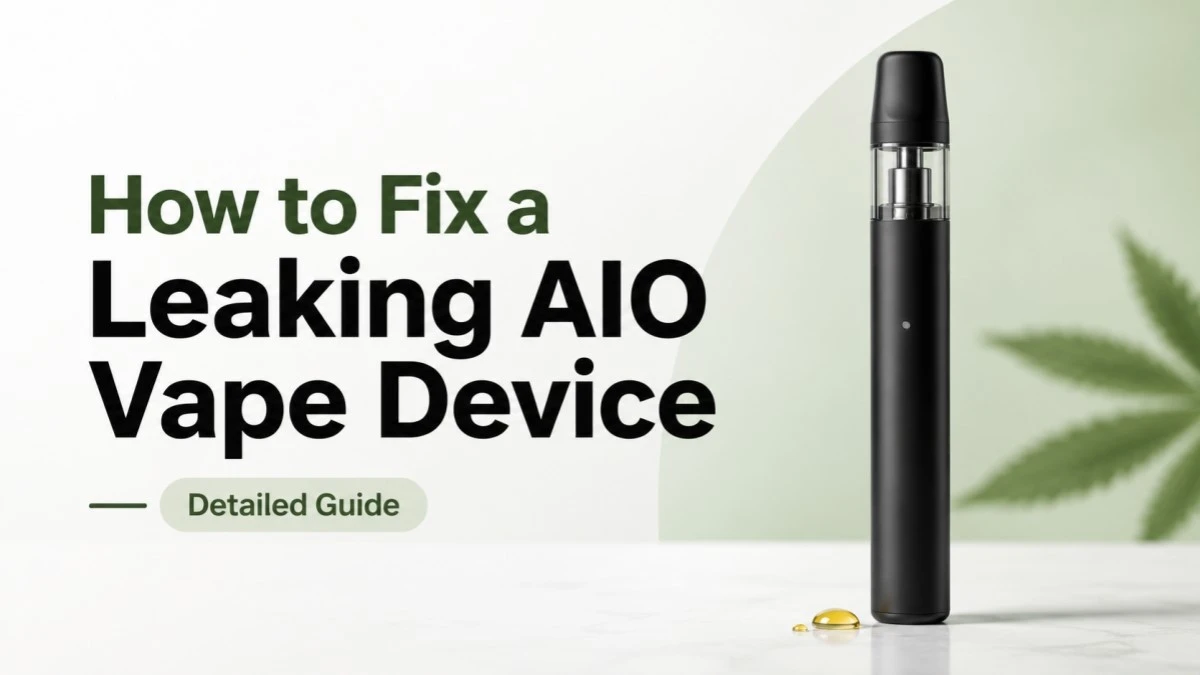
An AIO vape device is a type of cannabis vape hardware that combines the oil tank, ceramic heating core, airflow path, battery, and mouthpiece in one sealed unit. When an AIO starts leaking, the problem may be minor condensation, oil flooding inside the airway, or a structural failure that cannot be repaired.
The first step is not to keep vaping. Clean the device, identify where the liquid is coming from, and determine whether it is safe to use again.
What Should You Do Immediately When an AIO Vape Starts Leaking?
Stop using and charging the device as soon as you notice oil around the mouthpiece, airflow inlet, tank seam, or charging port.
Keep the AIO upright and wipe away visible residue with a dry, lint-free cloth. Do not insert a sharp object into the airway. Do not rinse a sealed device with water or alcohol, as liquid may enter the battery or airflow system.
Next, inspect the tank and exterior housing under good light. Look for cracks, gaps around the mouthpiece, deformation, or oil near the charging port. If the device feels unusually warm, allow it to return to room temperature before handling it further.
For a minor mouthpiece leak, leave the device upright at room temperature for 15–30 minutes after cleaning. Then check whether the liquid returns.
Stop using the device if:
- Oil continues to leak from the bottom or tank seam
- The tank is cracked or deformed
- Oil has entered the charging port
- The battery area becomes hot, swollen, or unstable
- The device produces an electrical or unusual chemical smell
A sealed cannabis AIO is not designed to be opened and repaired by the user. Cleaning may resolve condensation or minor airway flooding, but it will not repair a failed seal or cracked tank.
Is It Really Leaking, or Is It Just Condensation?
Vape condensation is liquid formed when warm vapor cools inside the mouthpiece and airflow channel. It often appears as a small amount of thin residue near the top of the device.
A true oil leak is usually thicker, stickier, and more persistent. After the area is cleaned, oil may return from the same seam, airflow opening, or mouthpiece.
Airway flooding sits between these two conditions. It happens when more oil reaches the ceramic core than the device can vaporize. Common signs include gurgling, reduced airflow, spitback, and oil collecting inside the mouthpiece.
| What You See | Most Likely Issue | Recommended Action |
|---|---|---|
| A small amount of liquid in the mouthpiece | Condensation | Wipe clean and monitor |
| Gurgling, spitback, or restricted airflow | Oil inside the airflow path | Keep upright, clean exterior openings, and use slower draws |
| Oil repeatedly returning from the bottom | Ceramic flooding or internal seal failure | Stop using the device |
| Oil coming from a crack or tank seam | Structural damage | Replace the device |
Cleaning and observation can help distinguish condensation from active leakage. Persistent oil around a seam or bottom airflow inlet should be treated as a hardware failure, not normal condensation.
Where Is the AIO Vape Leaking From?
The location of the oil usually provides the fastest clue to the cause.
Leaking From the Mouthpiece
Oil around the mouthpiece may result from condensation, an oversaturated ceramic core, or oil that has migrated into the center airway.
This is more likely when the device has been stored upside down, exposed to heat, or used with strong, rapid draws. Chain vaping can also warm the oil and increase its flow rate faster than the ceramic core can vaporize it.
Clean the mouthpiece exterior, keep the device upright, and allow it to cool. Resume only with slow, steady draws. If thick oil continues to collect in the mouthpiece, the device may be flooded or internally damaged.
Leaking From the Bottom Airflow Holes
Bottom leakage often indicates a more serious problem. Oil may have passed through the ceramic core and entered the lower airflow structure.
Common causes include low-viscosity oil, overfilling, excessive heat, aggressive inhalation, or a damaged internal seal. Because the airflow structure is usually close to the battery and activation sensor, continued bottom leakage should not be ignored.
If oil returns after the exterior is cleaned, stop using the device.
Leaking From the Tank Seam
Leakage from the side of the tank, mouthpiece joint, or body seam usually points to physical or assembly damage.
Possible causes include a cracked tank, displaced seal, incomplete mouthpiece installation, heat deformation, impact damage, or inconsistent component tolerances. These problems cannot be corrected by changing the draw technique or storage position.
A leaking seam means the oil containment system has failed. The device should be replaced.
What Causes an AIO Vape to Leak, and How Can You Fix It?
The Oil and Hardware Are Not Compatible
Oil-hardware compatibility describes how well a cannabis oil's viscosity and flow behavior match the ceramic core, intake openings, airflow path, power output, and sealing structure of a vape device.
Thin or terpene-rich formulations may enter the ceramic core too quickly. When oil feeding exceeds vaporization, the core becomes oversaturated and excess oil moves into the airway.
Intake-hole size is one part of this system. For example, a 1.2 mm intake configuration developed for a thick distillate may feed a thinner, terpene-heavy formulation too quickly. That number is not a universal standard; ceramic porosity, intake quantity, voltage, and tank design also affect performance.
Consumers cannot correct an oil-hardware mismatch in a prefilled device. Brands should test the final commercial oil formulation with the actual AIO hardware before mass production.
The Device Was Overfilled or Capped Incorrectly
AIO tanks require headspace, which is the small air buffer left above the oil. It gives the oil room to expand during filling, storage, transportation, and use.
When a tank is overfilled, oil may be pushed into the center airflow channel during mouthpiece installation. In compact AIO systems, even a 0.05 mL fill-volume difference can materially reduce the intended headspace.
Leakage risk also increases when the mouthpiece is capped at an angle, pressed with uneven force, installed too late, or not fully seated.
Brands should validate the actual fill volume, oil temperature, filling speed, capping pressure, and fill-to-cap window for each device platform. An overfilled device should be corrected before final capping through a controlled production procedure. Consumers should not open a sealed AIO or use a syringe to remove oil.
Heat, Storage, or Shipping Changed the Oil
Heat lowers cannabis oil viscosity. A device stored at 95°F may feed oil very differently from the same device stored at 70°F.
High temperatures can also place additional stress on tank materials and seals. Avoid leaving an AIO in a parked car, direct sunlight, or uncontrolled warehouse conditions. As a practical reference, temperatures above approximately 90°F, or 32°C, may increase oil migration risk.
Shipping adds more variables, including vibration, altitude changes, horizontal storage, and repeated heating and cooling cycles. This explains why a device may pass a short factory inspection but begin leaking after transportation.
Stable temperature, upright packaging, and shipping simulation are essential parts of leak prevention.
The Ceramic Core Was Flooded by Aggressive Drawing
A hard draw creates a stronger pressure change inside the airflow path. This can pull oil toward the ceramic core faster than it can be vaporized.
The usual symptoms are gurgling, spitback, weak airflow, and oil in the mouthpiece. Strong suction does not improve vapor quality. It increases the chance of flooding.
Use slow, steady draws and avoid repeated hits without allowing the device to cool. If airflow remains restricted or oil begins leaking from the bottom, the problem has moved beyond normal user adjustment.
When Should You Stop Using and Replace the Device?
Minor condensation may be manageable. Structural leakage is not.
Replace the AIO if the tank is cracked, oil repeatedly returns from a seam, or the bottom continues leaking after the device has been cleaned and stored upright. The same applies when oil reaches the charging port, the housing becomes deformed, or the device shows abnormal heat.
Do not pry off the mouthpiece, reopen the tank, reposition internal seals, or attempt to repair the battery section. The ceramic core and internal sealing points in a closed AIO are generally not user-serviceable.
When oil containment has failed, replacement is the only reliable solution.
How to Prevent AIO Vape Leaks
Prevention Tips for Users
Store the device upright whenever possible. Avoid keeping it upside down in a pocket or loose inside a bag, where heat, pressure, and movement can push oil toward the airflow path.
Keep the AIO away from direct sunlight, freezing conditions, and hot vehicles. Use slow draws rather than aggressive suction, and avoid chain vaping when the device feels warm.
Wipe the mouthpiece and exterior airflow openings when residue appears. External cleaning helps maintain airflow, but liquid cleaners should not be allowed to enter a sealed device.
Prevention Tips for Cannabis Brands and Fillers
Leak prevention begins before production.
Brands should test the final oil formulation rather than relying only on labels such as live resin, live rosin, or distillate. Two oils in the same category may have very different viscosity, terpene content, and thermal behavior.
Before moving to a full production run, validate:
- Oil viscosity and ceramic-core feeding
- Recommended fill volume and headspace
- Filling temperature and speed
- Mouthpiece alignment and capping pressure
- Time between filling and final capping
- Upright, horizontal, and inverted storage
- High- and low-temperature cycles
- Shipping vibration and post-transport leakage
- Long-term material compatibility
A short room-temperature leak test is not enough. Hardware should be evaluated under the storage, shipping, and usage conditions it will experience in the real market.
FAQ About Leaking AIO Vapes
Can I Still Use an AIO Vape That Is Leaking?
A device with minor condensation may be cleaned and monitored. Do not continue using it if oil repeatedly leaks from the bottom or tank seam, enters the charging port, or appears with abnormal heat or physical damage.
Why Is My AIO Vape Leaking From the Mouthpiece?
Common causes include condensation, oil inside the center airway, low-viscosity oil, aggressive inhalation, high temperatures, and storing the device sideways or upside down.
Can Hot Weather Make a Vape Leak?
Yes. Heat lowers oil viscosity, allowing it to feed the ceramic core and airflow system more quickly. High temperatures can also stress tank materials and seals.
Can a Sealed AIO Vape Be Repaired?
External residue and minor airway flooding may improve after cleaning, upright storage, and temperature stabilization. A cracked tank, failed seal, or persistent bottom leak cannot be safely repaired by the user.
Fix the Cause, Not Just the Mess
To fix a leaking AIO vape device, first stop using it, clean the exterior, keep it upright, and identify where the oil is coming from. Condensation and minor flooding may improve, but persistent leakage usually points to oil-hardware incompatibility, overfilling, incorrect capping, heat exposure, or structural seal failure.
ASM VAPE develops customizable cannabis AIO hardware for live rosin, live resin, distillate, and other oil formulations. Contact us to test your oil with compatible ceramic hardware and reduce leakage risk before mass production.
![How to Choose Vape Hardware for Delta 9 Oil [2026 Guide]](/uploads/43868/info/n20260923113103fe52e.jpg)