Vape pens and carts are often used for the same purpose: vaporizing cannabis oil. But they are not the same type of hardware. A vape pen usually refers to a complete all-in-one device, while a cart, or cartridge, is the oil-filled tank that needs a compatible battery. The difference affects cost, convenience, oil compatibility, branding, and long-term user experience.

Vape Pens vs Carts: The Quick Difference
In cannabis vape hardware, a vape pen usually means an all-in-one disposable vape device. It combines the battery, oil tank, heating core, airflow path, and mouthpiece into one finished unit. The user opens the package, inhales, and uses the device until the oil is finished.
A vape cart, short for vape cartridge, is different. It is not a full device by itself. A cart contains cannabis oil, a heating element, a tank, and a mouthpiece, but it must be attached to a battery to work. In most cannabis markets, this usually means a 510-thread battery.
The simplest way to separate the two is this:
| Category | Vape Pen | Vape Cart |
| Hardware type | Complete all-in-one device | Oil cartridge used with a battery |
| Battery | Built in | Separate |
| Setup | Ready to use | Requires battery connection |
| Replacement | Whole device is replaced | Only cartridge is replaced |
| Main advantage | Convenience and controlled experience | Flexibility and lower long-term hardware waste |
A vape pen is built around simplicity. A cart is built around modularity.
For consumers, the choice often comes down to convenience versus flexibility. For cannabis brands, the decision goes deeper. It affects hardware cost, battery compatibility, oil performance, product positioning, and after-sales issues such as clogging, leaking, weak vapor, and burnt taste.
What Is a Vape Pen?
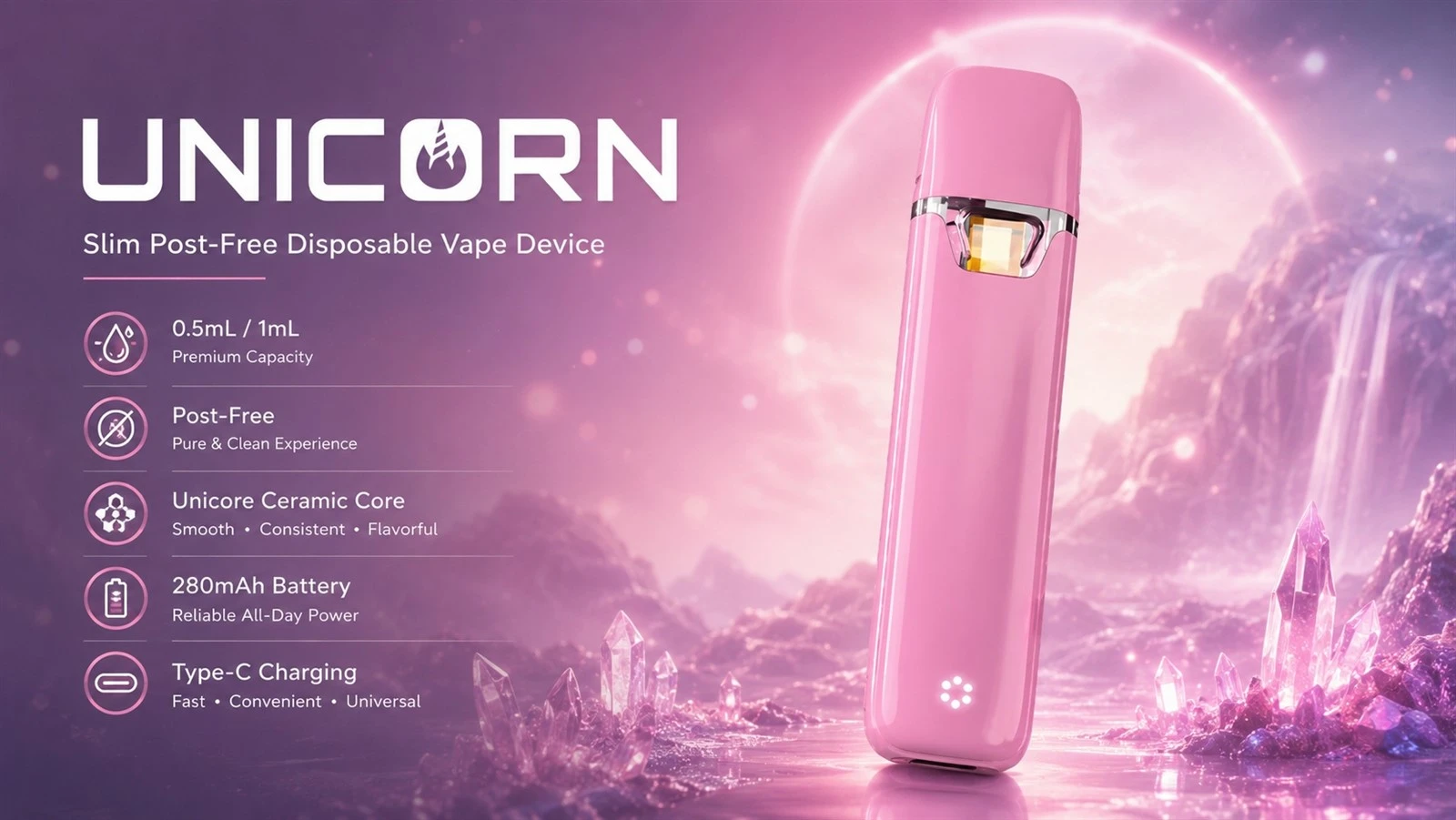
A vape pen is a compact vaporizing device shaped like a pen or small cylinder. In the cannabis hardware industry, the term often refers to an all-in-one disposable vape pen, also called an AIO vape pen. This means the device comes as one complete unit.
A typical cannabis vape pen includes:
- Mouthpiece
- Oil tank or chamber
- Ceramic heating core
- Internal battery
- Airflow channel
- USB-C charging port on many higher-capacity models
Most modern AIO vape pens are draw-activated. The user does not press a button. The device activates when airflow is detected during inhalation. This keeps the user experience simple and reduces the learning curve for new customers.
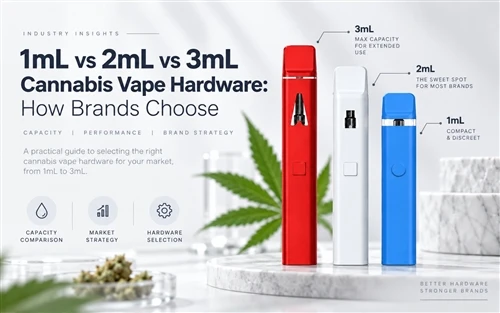
Common oil capacities include 0.5g and 1g. Larger 2g disposable vape pens are also common, but they need better battery planning, stronger oil-feeding performance, and more reliable anti-clog airflow design. If the battery is too small or the oil flow is too slow, the user may not finish the oil before performance drops.
The biggest advantage of a vape pen is system control. The battery output, coil resistance, tank structure, and airflow can be engineered together before the product reaches the user. This reduces compatibility problems because the user does not need to choose a battery or adjust voltage.
That is why vape pens work well for ready-to-use cannabis oil products, especially when the brand wants a simple, controlled, and consistent user experience.
What Is a Vape Cart?
A vape cart, or vape cartridge, is a detachable oil container designed to connect with a separate battery. The most common type in the cannabis market is the 510 vape cartridge, which uses a standardized threaded connection.
A vape cart usually includes:
- Glass, metal, or ceramic tank
- Ceramic or quartz heating core
- Mouthpiece
- Center post or postless oil chamber design
- 510-thread connection
- Intake holes for oil feeding
A cart becomes a working vape system only when it is attached to a compatible battery. The battery supplies power to the heating element, which vaporizes the cannabis oil inside the cartridge.
Most cannabis vape carts are offered in 0.5g and 1g capacities. Larger formats exist, but they require careful engineering. More oil means a longer lifecycle, and a longer lifecycle increases the risk of clogging, leaking, oil darkening, and inconsistent heating if the hardware is not properly matched.
The main value of vape carts is flexibility. Users can keep one battery and switch between different cartridges, strains, flavors, or oil types. For brands and dispensaries, carts make it easier to build a wide product lineup without placing a battery inside every single unit.
A cart is not less advanced than a vape pen. It is simply a different system.
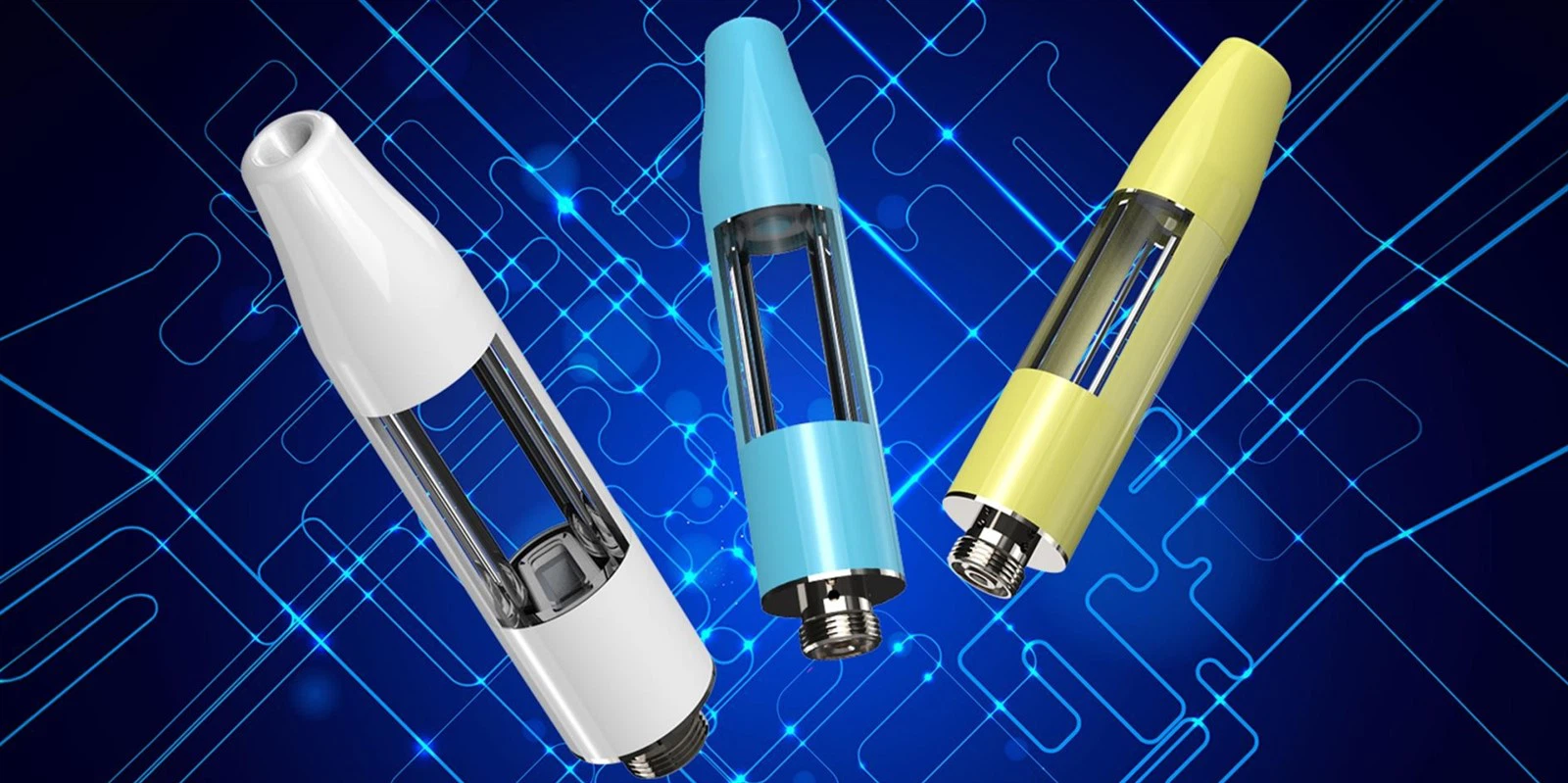
Vape Pens vs Carts: Key Differences at a Glance
The most important difference is not shape. It is system design. Vape pens are closed all-in-one systems. Vape carts are modular systems that depend on a separate battery.
| Feature | AIO Vape Pen | Vape Cart |
| System design | Battery, tank, coil, mouthpiece integrated | Cartridge connects to external battery |
| Battery | Built-in battery | User-selected 510 battery |
| Ease of use | Very easy, ready to use | Easy, but needs compatible battery |
| User control | Usually limited or preset | Depends on battery; may allow voltage control |
| Compatibility risk | Low, because the system is pre-matched | Higher, because batteries vary |
| Hardware cost per unit | Higher, because battery is included | Lower, because battery is separate |
| Long-term use | Whole device replaced | Battery reused, cartridge replaced |
| Sustainability | More electronic waste | Less battery waste over time |
| Branding space | Strong device-body branding options | Strong packaging and cartridge-lineup branding |
| Best fit | Convenience, travel, beginner-friendly products | Multi-strain menus, repeat purchase, modular users |
AIO vape pens remove friction. The user does not need to think about batteries, voltage, thread compatibility, or charging habits beyond the device itself.
Vape carts offer more control, but they also introduce more variables. A high-quality cart may still perform poorly if the user pairs it with the wrong battery voltage. A low-quality battery may overheat the oil, damage terpenes, or create a burnt taste.
For brands, this matters. AIO vape pens allow tighter control over the full experience. Vape carts offer lower hardware cost and more product variety, but they require stronger design tolerance because the cartridge may be used with many different batteries.
Performance Differences: Flavor, Vapor, Potency, and Clogging
Performance is where many simple comparison articles get it wrong. A vape pen is not automatically smoother than a cart. A cart is not automatically more flavorful than a disposable vape.
Flavor and vapor quality depend on hardware engineering.
The most important factors include ceramic core design, voltage stability, oil intake size, airflow structure, coil resistance, and oil formulation. A well-designed AIO vape pen can deliver excellent flavor. A well-designed 510 cartridge can do the same.
Flavor and Vapor Quality
Flavor depends heavily on heating control. Terpene-rich oils such as live resin and live rosin do not respond well to excessive heat. If the device runs too hot, the vapor may become harsh, and delicate flavor compounds can degrade quickly.
AIO vape pens have one clear advantage: the manufacturer can match the battery output, coil resistance, oil viscosity, and airflow before the product is filled and sold. This allows a more controlled power curve.
Vape carts face a different challenge. The same cartridge may be used with many batteries. Some batteries output lower voltage. Others may run too hot. Some users choose variable-voltage batteries and set them too high. This means the cartridge must be engineered to tolerate a wider range of use conditions.
For premium cannabis oil, this design tolerance is critical.
Potency
Potency mainly comes from the oil formulation, not the device format.
A vape pen is not automatically more potent than a cart. A cart is not automatically weaker than a disposable vape. THC, CBD, minor cannabinoids, and terpene content are determined by the oil formulation and lab-tested concentration.
Hardware affects how that formulation is delivered. It influences vapor density, consistency, dose per puff, heating stability, and flavor preservation. Poor hardware can make strong oil feel weak if vapor production is inconsistent. It can also make premium oil taste burnt if heating is unstable.
The device does not create potency. It controls delivery.
Clogging and Leaking
Clogging and leaking are not just user problems. They are hardware problems too.
Cannabis oils vary in viscosity. Distillate may flow more easily. Live resin, live rosin, HTFSE, and sauce-style formulations can be thicker and more temperature-sensitive. If the intake holes are too small, oil may not feed fast enough. If the airflow path collects too much condensed vapor, clogging becomes more likely.
AIO vape pens need strong anti-clog design because the user cannot open the device for cleaning. The airflow system must stay stable through the full oil lifecycle.
Vape carts can sometimes benefit from preheat functions on compatible batteries, especially with thicker oils. But they can also suffer from overheating if paired with a high-voltage battery. This is why cart design must balance oil flow, coil performance, and voltage tolerance.
A good device is not just one that works on day one. It must keep working until the oil is finished.
Which Is Better for Distillate, Live Resin, and Live Rosin?
Oil type should influence hardware choice. Different cannabis extracts behave differently inside a vape device.
Distillate Oils
Distillate is one of the easiest cannabis oils to match with hardware because it is usually more stable and predictable. Both AIO vape pens and 510 cartridges can work well for distillate.
For a convenience-focused product line, an AIO disposable vape pen is often a strong choice. It gives the user a complete device and removes the need for a separate battery.
For a wide strain or flavor lineup, 510 carts may be more efficient. Brands can offer multiple SKUs while users keep the same battery.
Live Resin Oils
Live resin is valued for its terpene profile and fuller cannabis flavor. That means heat control becomes more important.
AIO vape pens can be tuned as a full system. Battery output, coil resistance, airflow, and oil intake can be designed around the specific live resin viscosity. This can help create a smoother and more consistent experience.
510 cartridges can also work well for live resin, but the cartridge should be designed for stable oil feeding and paired with clear voltage guidance. Running a live resin cart at too high a voltage can produce harsh vapor and reduce flavor quality.
Live Rosin and High-Viscosity Oils
Live rosin, solventless extracts, HTFSE, and sauce-style oils place higher demands on vape hardware. They are often thicker and more sensitive to heat. Poor hardware matching can lead to dry hits, weak vapor, clogging, or burnt taste.
For thick oils, the key is not simply choosing a pen or a cart. The key is hardware matching.
Important design points include:
- Ceramic core material and porosity
- Oil intake hole size
- Stable low-voltage output
- Preheat strategy
- Short and clean airflow path
- Leak-resistant tank structure
- Anti-clog mouthpiece and airway design
Both AIO vape pens and carts can work for thick oils if the hardware is designed correctly. The wrong hardware format, however, can damage even a premium extract.
Cost, Sustainability, and Branding Differences
For cannabis brands, the vape pen vs cart decision is also a business decision.
AIO vape pens usually have a higher hardware cost per unit because every device includes a battery, tank, heating system, charging structure, airflow path, and mouthpiece. The benefit is a complete user experience. The brand controls more of what happens after the product leaves the shelf.
Vape carts usually have a lower hardware cost per cartridge because the battery is not included. This makes them attractive for multi-strain menus, dispensary cartridge programs, and repeat-purchase product lines. The user buys or reuses the battery, then replaces only the cart.
Sustainability also differs. Disposable vape pens create more electronic waste because the entire device is discarded after use. Cartridge systems reduce battery waste because the battery can be reused many times. This does not make carts impact-free, but it does make them more modular.
Branding works differently too.
AIO vape pens offer more space for device-level identity. Brands can customize the device body, color, finish, logo, oil window, mouthpiece shape, and packaging. This is useful for product lines built around shelf appeal and strong visual identity.
Carts rely more on cartridge design, tank material, mouthpiece style, packaging, and oil appearance. They also work well for brands that want a broad menu of strains or formulations under one battery ecosystem.
Neither option is just a container. Each format shapes how the product is sold, used, and remembered.
How Should Cannabis Brands Choose Between Vape Pens and Carts?
The right choice depends on the oil, user segment, price point, and product strategy.
Choose AIO Vape Pens If...
AIO vape pens are a better fit when the product needs to be simple, complete, and ready to use. They are especially useful for customers who do not want to manage batteries or settings.
Choose AIO vape pens when:
- The target user wants maximum convenience
- The product is designed for beginners or casual users
- Battery compatibility should not be a user concern
- The brand wants full control over power output and heating behavior
- The product line depends on strong device appearance
- The oil requires carefully matched voltage, airflow, and ceramic heating
- The market positioning is portable, discreet, and easy to use
AIO is not only a beginner format. With the right ceramic core, voltage output, and airflow design, it can also support premium live resin or live rosin products.
Choose Vape Carts If...
Vape carts are a better fit when flexibility and SKU variety matter. They work well for users who already own 510 batteries and want to switch between different oils, strains, or flavors.
Choose vape carts when:
- The target user already understands 510 batteries
- The brand wants to offer many strains or oil types
- Lower hardware cost per unit is important
- Battery reuse and reduced electronic waste matter
- The product strategy depends on repeat cartridge purchases
- Users want adjustable voltage or more control over their session
- The brand wants to test smaller batches or seasonal formulations
Carts are especially strong for broad menus and established cannabis users. The tradeoff is that the brand has less control over the battery the consumer will use.
Offer Both If...
Many mature cannabis brands use both formats. AIO vape pens can serve convenience-driven product lines, while carts can support repeat customers and wider strain menus.
This is often the most practical approach. Use AIO devices when the experience must be fully controlled. Use carts when flexibility, cost efficiency, and product variety matter more.
The hardware should follow the product strategy, not the other way around.
FAQ About Vape Pens and Carts
Are vape pens and carts the same?
No. A vape pen is usually a complete device. A cart is an oil cartridge that needs a compatible battery. In cannabis hardware, the common comparison is AIO disposable vape pen vs 510 cartridge.
Do vape carts need batteries?
Yes. Most vape carts need a 510-thread battery. Without a battery, the cartridge cannot heat the oil or produce vapor.
Are disposable vape pens better than carts?
Disposable vape pens are better for convenience and controlled user experience. Carts are better for flexibility, battery reuse, and multi-strain product lines. The better choice depends on the user and the oil.
Which gives better flavor?
Flavor depends more on heating stability, ceramic core design, oil intake, airflow, and oil formulation than on whether the product is a pen or a cart.
Which is better for live resin or live rosin?
Both can work. Live resin and live rosin need hardware designed for terpene protection, stable low-temperature vaporization, smooth oil feeding, and clog resistance. Thick oils should not be matched with generic hardware.
Can disposable vape pens be refilled?
Most prefilled disposable vape pens are not designed for refilling. Refilling them may damage the device, affect performance, or create safety issues. Brands should use hardware designed for the intended filling and lifecycle.
Final Thoughts: Match the Hardware to the Oil and Market
Vape pens and carts both vaporize cannabis oil, but they solve different problems. Vape pens provide a complete, ready-to-use system with stronger control over battery, heating, and airflow. Carts provide modular flexibility, lower per-unit hardware cost, and compatibility with reusable batteries.
For cannabis brands, the best choice is not simply "pen" or "cart." The better question is whether the hardware matches your oil viscosity, target users, product positioning, and reliability standards.
ASM VAPE provides customizable cannabis vape hardware for distillate, live resin, live rosin, and other oil formulations. If you need help choosing between AIO vape pens and 510 cartridges, our team can help match the right hardware to your product line. Contact us to discuss your oil type, capacity, and customization needs.
![How to Choose Vape Hardware for Delta 9 Oil [2026 Guide]](/uploads/43868/info/n20260923113103fe52e.jpg)