A cannabis vape product can fail before the oil itself has a chance to perform.
The formulation may be clean. The terpene profile may be carefully built. The packaging may look premium on the shelf. But if the vape hardware burns the oil, leaks after filling, clogs halfway through use, or adds a metallic taste, the customer will not blame the hardware supplier. They will blame the brand printed on the device.
This is why vape hardware quality matters.
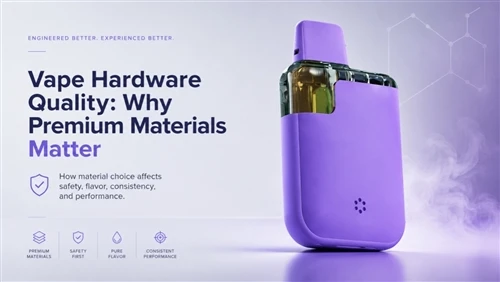
In the cannabis vape industry, hardware is not just a container for THC or CBD oil. It is a heating system, an oil-contact system, an airflow path, a sealing structure, and, in disposable or all-in-one devices, a battery-powered delivery system. Premium materials are not a luxury detail. They decide how the oil heats, how the vapor tastes, how safely the device performs, and how consistently the product reaches the end user.

Vape Hardware Is More Than an Oil Tank
Cannabis vape hardware refers to the physical device used to store, heat, and deliver cannabis oil as vapor. This includes 510 cartridges, disposable vape pens, all-in-one vape devices, ceramic heating cores, tanks, mouthpieces, center posts, seals, airflow channels, batteries, and circuit components.
Every part has a job.
The tank holds the oil for weeks or months before use. The heating core absorbs and vaporizes the oil. The metal parts may sit close to the vapor path. The seals control leakage. The airflow design affects draw resistance, condensation, and clogging. In an AIO disposable vape device, the battery output must also match the coil and oil viscosity.
That is a lot of work for a small device.
A 1ml cannabis cartridge may look simple from the outside, but inside it must handle thick distillate, high-terpene live resin, repeated heating cycles, shipping temperature changes, and pocket use after purchase. If one material is poorly selected, the whole product experience can change.
Good oil cannot rescue poor hardware.
Premium vs. Low-Grade Vape Hardware Materials
Premium vape materials are selected for stability under oil contact, heat exposure, repeated use, and long-term storage. Low-grade materials may look acceptable in product photos, but problems often appear after filling, shipping, or real customer use.
|
Hardware Component |
Premium Material / Design Direction |
Why It Matters |
|
Heating core |
High-quality ceramic or mesh ceramic system |
Supports even heating, stable oil absorption, smoother vapor |
|
Oil tank |
Borosilicate glass, high-compatibility PCTG, or other oil-resistant materials |
Helps reduce cracking, corrosion, and flavor contamination |
|
Metal parts |
316L stainless steel or lead-free metal components |
Helps reduce metallic taste and heavy metal concerns |
|
Seals / O-rings |
Terpene-resistant sealing materials |
Reduces leakage, swelling, and long-term seal failure |
|
Mouthpiece |
Food-grade, heat-resistant material |
Affects vapor path cleanliness and user touch feel |
|
Battery system |
Stable cell, proper PCB, controlled output |
Important for vapor consistency and disposable device safety |
The key point is simple: premium material is not one single label. A cartridge is not "premium" just because it uses ceramic. A disposable vape is not reliable just because it has USB-C charging.
The full system has to work together.
Low-grade materials create very predictable problems. Cheap metal parts may cause metallic taste or increase heavy metal concerns. Poor ceramic cores may have uneven porosity, leading to dry hits, weak vapor, or clogging. Weak plastic tanks may crack or react poorly with terpene-rich oils. Thin or incompatible seals may fail after filling. In disposable vape hardware, unstable battery output can make the first 100 puffs feel strong and the last 200 feel weak.
These are not small defects. In a commercial launch, they become returns, complaints, and lost repeat buyers.
Premium Materials Help Reduce Safety and Heavy Metal Risks
Vape hardware safety is closely tied to material stability. In cannabis vape cartridges, some metal components, heating elements, surface treatments, soldering areas, or contact parts may sit near the oil-contact area or vapor path. When heat, oil, and time are added, material control becomes serious.
Heavy metal risk is one of the most important concerns in cannabis vape cartridge materials safety. Lead, cadmium, nickel, chromium, and copper are commonly discussed in vape hardware testing because they may appear in low-quality metals, coatings, or poorly controlled components. Premium materials do not remove the need for testing, but they make risk control much more manageable.
This matters especially in regulated cannabis markets, where brands are expected to show stronger control over product safety, testing, and supplier quality.
A well-built hardware program usually includes:
- lead-free metal components;
- stable ceramic materials;
- clean vapor path design;
- oil-contact material review;
- heavy metal testing;
- batch consistency control;
- pre-shipment inspection.
The mistake is thinking safety starts after production.
It starts with material selection.
How Premium Materials Improve Flavor and Vapor Quality
Cannabis oil flavor is fragile. Terpenes are volatile aromatic compounds that help define the flavor and aroma of different strains. Cannabinoids and terpenes can both be affected by excessive heat. When a heating element creates hot spots, the oil may scorch instead of vaporize cleanly.
That is when users notice burnt taste, harsh throat feel, weak flavor, or a strange aftertaste.
High-quality ceramic heating elements in cannabis vape hardware are designed to support more even heat distribution. When oil absorption is stable and temperature rise is controlled, the vapor is smoother and the flavor profile stays closer to what the formulation intended.
But "ceramic" alone is not enough.
Ceramic core quality depends on material purity, pore structure, firing control, resistance consistency, and the match between the core and the oil. If the ceramic porosity is too uneven, some areas may run dry while others remain oversaturated. The result can be burnt hits, clogging, spitback, or inconsistent vapor.
A thick 1g distillate formula needs different wicking behavior than a high-terpene live resin oil. CBD formulations may also create different flow and crystallization challenges. A good vape hardware manufacturer should not recommend the same core and intake design for every oil.
Clean materials also protect flavor in another way. Low-quality metals may add a metallic note. Incompatible plastics or seals may create odor transfer. Poor coating or plating may affect vapor purity. For premium oil products, this is a costly failure. The customer paid for the oil's profile, not the taste of the hardware.
Leak Resistance and Clogging Start With Materials
Leakage is often blamed on filling. Sometimes that is true. But in many cases, leaks are material and tolerance problems.
A cartridge or AIO device may leak because the seal material is not compatible with the oil. The O-ring may swell after contact with terpenes. The tank and mouthpiece may not fit tightly enough. The center post may shift during filling or transport. High temperatures in warehousing or delivery may create pressure changes inside the device.
A device that passes a short desktop test can still fail after two weeks on a retail shelf or a few days in a warm delivery truck.
Clogging follows a similar pattern. High-viscosity distillate needs stable oil absorption. If the ceramic core cannot keep up, residue builds around the heating area. If airflow design creates too much condensation, the mouthpiece may block before the oil is finished. If battery output is unstable, the oil may heat unevenly and thicken near the core.
Premium vape hardware quality reduces these issues through better material compatibility, tighter tolerances, more stable heating, and proper airflow design. It is not only about making a cartridge survive the first fill. It is about helping the product perform until the last usable puff.
Different Cannabis Extracts Need Different Hardware Thinking
Cannabis vape hardware is not the same as ordinary e-liquid hardware. THC and CBD oils can be thicker, more terpene-rich, and more sensitive to temperature and material contact.
Distillate usually requires strong wicking stability and controlled heating. Live resin needs flavor protection and material compatibility because terpene content can be higher and more complex. Rosin may require gentler heating and better residue management. CBD oil may present crystallization or viscosity changes depending on formulation.
This is where "best materials for cannabis vapes" becomes a practical question, not a marketing phrase.
A proper hardware selection process should consider oil viscosity, terpene percentage, filling volume, target vapor output, storage conditions, and device type. For example, a 0.5ml cartridge for a thinner oil may need a different intake hole and ceramic structure than a 2ml all-in-one disposable designed for thicker cannabis oil.
There is no universal hardware for every extract.
Material Quality in Disposable and AIO Vape Devices
Disposable vape hardware and AIO vape devices add another layer of responsibility. These products combine oil storage, heating, airflow, battery, PCB, housing, and charging components in one sealed system.
A premium AIO device must do more than look good. The oil tank must resist corrosion or cracking. The ceramic heating system must deliver smooth vapor without burning the oil. The battery must provide stable voltage output as power drops. The circuit must protect against short circuit, over-discharge, and charging instability.
Poor battery output creates a common problem: strong vapor at the beginning, weak vapor near the end, even when oil remains in the tank. For brands selling 1ml, 2ml, or larger disposable formats, this can lead to unfinished oil and customer dissatisfaction.
The material system and electrical system must be designed as one product.
How to Identify Premium Vape Hardware Before Launch
A reliable supplier should be able to explain more than capacity, price, and delivery time. Before choosing cannabis vape hardware, brands should ask specific questions.
Key evaluation points include:
- What materials are used in the oil tank, mouthpiece, seals, ceramic core, and metal parts?
- Are oil-contact materials suitable for THC, CBD, and terpene-rich oils?
- Has the hardware been checked for heavy metal risk?
- Is the ceramic core matched to oil viscosity?
- Are leak testing, airflow testing, resistance testing, and aging tests performed?
- Are samples and mass production controlled under the same specifications?
- For disposable or AIO devices, is battery output stable from first puff to last?
A good sample is useful. A stable production batch is better.
Many leakage, burnt taste, poor flavor delivery, and inconsistent vapor problems can be reduced by evaluating the full system: tank material, airtight structure, ceramic heating design, and battery output. For example, ASM VAPE optimizes its AIO disposable vape devices with Eastman PCTG oil tanks and mouthpieces, high-density mesh ceramic heating systems, and constant voltage battery output to improve oil compatibility, flavor consistency, and vapor stability.
The goal is not to make hardware more complicated. The goal is to make the final product more predictable.
Why Premium Materials Protect the Brand
For cannabis brands, premium materials are not only about user comfort. They are brand protection.
When a cartridge leaks inside its package, the retailer sees a quality issue. When a disposable tastes burnt, the consumer assumes the oil is poor. When a device clogs halfway through, the brand may lose a repeat customer. When heavy metal questions appear, the issue becomes bigger than one bad review.
Premium materials help protect the value already built into the oil, testing, packaging, compliance work, and retail relationships.
Vape hardware quality answers the question in the title directly: premium materials matter because they influence safety, flavor, vapor quality, leak resistance, oil compatibility, battery stability, and market trust. A low-cost device can become expensive very quickly when it damages the product experience after launch.
If you are developing a cannabis vape cartridge, disposable vape pen, or AIO device for regulated markets, ASM VAPE can help you evaluate hardware materials, oil compatibility, and custom device solutions. Contact our team to discuss the right hardware structure for your oil and product plan.