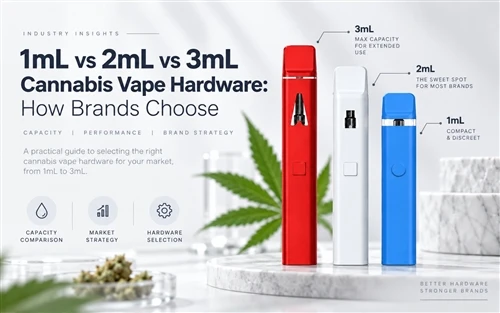
When people talk about vape hardware, they are usually talking about China-whether they realize it or not. Today, over 90% of the world's vape devices are manufactured in Shenzhen. That concentration is not accidental. It comes from two things: origin and infrastructure.
China is where modern e-cigarettes were first developed. Since then, the region has built a complete supply chain around it-batteries, ceramic coils, chipsets, plastics, assembly lines-all within a few hours' distance. For a hardware category that depends heavily on integration, this matters more than labor cost alone.
From a buyer's perspective, there are three practical advantages:
- Speed: Prototypes can move to mass production in weeks
- Cost efficiency: Not just cheaper labor, but lower component cost due to clustering
- Scalability: Factories are built for volume, not small-batch experiments
A common concern is whether "Made in China" equals lower quality. In practice, quality differences come from which factory you choose, not the country itself. The same region produces both globally trusted devices and low-end copies.
For sourcing decisions, China is not just the cheapest option-it is the most complete manufacturing ecosystem available.

Understanding Vape Hardware Components and Their Costs
Cannabis vape hardware boils down to a few key parts, each driving price and performance.
- Battery: 300–650mAh, with pre-heat, variable voltage, or a small display for charge/voltage readouts. Basic button or auto-draw versions start around $1.8–$3. High-capacity with constant voltage output (like EVE cells) hit $4–$7.
- Atomizer/Cartridge Core: Ceramic mesh or postless ceramic dominates now-$0.9–$3 per unit. Cotton wick versions are cheaper but prone to burning dry with thick oils.
- Tank/Housing: PCTG (Eastman-grade, corrosion-resistant) or metal shells. Plastic keeps costs at $0.5–$1.5; better sealing adds $1–$2.
- Extras: Pre-heat circuit, magnetic connection, airflow control, or LED/display-each adds $0.4–$1.8.
In 2025–2026 wholesale (MOQ 1k–5k):
- Entry-level disposable shell or basic 510 battery + cart: $2–$5 total.
- Mid-range with ceramic mesh, pre-heat, and display: $5–$10.
- Anything below $2 usually skips safety features or uses recycled materials-risky for regulated cannabis products.
Prices edged up slightly in 2026 due to policy shifts and material costs, but mid-tier options still offer the best balance for brands.
Here's a quick cost breakdown table for typical cannabis-compatible setups:
|
Component |
Entry-Level (~$2–$5 total) |
Mid-Range Affordable (~$5–$10 total) |
Impact on Thick Oil Performance |
|
Battery |
300mAh basic |
500–650mAh + pre-heat + display |
Better voltage stability, fewer dry hits |
|
Coil Type |
Cotton wick |
Ceramic mesh/postless |
Lower burn risk, better flavor retention |
|
Tank Material |
Standard plastic |
PCTG anti-leak design |
Leak rate drops from 20–40% to <10% |
|
Safety Features |
Minimal |
Heavy metal tested, constant output |
Passes lab compliance more reliably |
Cheap vs Expensive Vape Hardware: Where the Quality Gap Shows Up
The biggest differences appear when you run thick cannabis oils through them.
Cheap hardware ($1.5–$6/unit) often uses cotton wicks or simple metal coils. With viscous distillate or live resin, you get:
- Leak rates of 15–40% (oil seeps from poor seals or wicking).
- Burnt or metallic taste after 20–30% of the fill.
- Higher heavy metal risk-cheap alloys leach nickel, lead, or chromium under heat.
- Inconsistent batches-some units work fine, others fail voltage or airflow.
Expensive options ($8–$20+) add premium features: zirconia ceramic, reinforced PCTG, advanced PCB for stable output. But in the affordable mid-range, many factories now close much of that gap.
For cannabis, the real test is compatibility:
- Cotton wick hardware struggles-oil doesn't wick evenly, leading to dry hits or clogs.
- Ceramic mesh heats uniformly, preserves terpenes better, and shows almost no metal leaching in tests.
- Leak control comes from structure (postless + tight seals) more than price-good mid-range designs hit <5–10% failure.
In practice, we've seen mid-range ceramic setups outperform some "premium" cotton-based ones on thick oils. The expensive tier shines in ultra-custom runs or exotic materials, but for standard licensed products, affordable ceramic already delivers what most brands need.

Yes, There Are Affordable Options That Actually Perform Well
Mid-range hardware in the $3.5–$10 range has become the sweet spot in 2025–2026.
What makes it work:
- Ceramic mesh or postless cores as standard-stable heating, low burn risk, excellent flavor carry-through.
- Pre-heat + voltage display on many units-helps with thick oils that need gentle warmup.
- Leak-proof designs using PCTG tanks and optimized airflow-real-world leak rates stay under 10%.
- Heavy metal compliance built in-reputable lines run third-party tests routinely.
Factories specializing in cannabis (like those with GMP workshops and dedicated thick-oil testing) push these features into affordable tiers. General disposables might still cut corners, but cannabis-focused ones prioritize consistency to avoid returns from US/German clients.
Below $2–$3, quality drops too far-skip it for regulated markets. Above $10, you're paying for extras that may not move the needle on core performance.
How to Pick the Best Affordable Supplier in China
Look for these non-negotiables when screening:
- Proven cannabis experience-thick oil testing data, postless/ceramic case studies.
- Certifications: GMP cleanroom, heavy metal reports, CE/ROHS/ISO.
- Scale and track record: monthly capacity in hundreds of thousands, real client brands (licensed US/German names help).
- Tech specs: ceramic mesh with partners like ECAP, PCTG tanks, EVE or similar batteries, pre-heat + display options.
- Customization flexibility: OEM on voltage/resistance/capacity tailored to your oil viscosity.
- Support: sample policy (quick turnaround), after-sales (low return rates), overseas lab or engineer visits.
Red flags: rock-bottom prices with no reports, WeChat-only communication, no English site, or zero cannabis references.
How to Actually Wholesale Vape Hardware from China
Step-by-step process that avoids most pitfalls:
- Nail down specs first: type (disposable/510/pod), capacity, voltage/pre-heat/display needs, compliance requirements.
- Shortlist 3–5 suppliers-cross-check reports, client lists, and sample photos.
- Order samples-test with your actual oil for leak, flavor, heavy metals, and consistency.
- Negotiate: price per unit, mold/tooling fees (if custom), exclusivity, payment terms (30% deposit common).
- Place order-confirm production timeline (8–20 days typical), QC checkpoints.
- Handle shipping & customs-air/sea options, prepare docs for tariffs/compliance.
- Inspect first batch on arrival-set up long-term QA with the factory.
Risks in 2025–2026: tariff fluctuations (US side especially), occasional material shortages. Suppliers with steady exports and cannabis focus handle these better.
What "Real Value" Actually Means in Affordable Vape Hardware
High Affordable isn't the lowest quote-it's hardware that runs consistently, passes labs without rework, and keeps your brand out of complaints.
Look for:
- Leak rate under 10% in real use.
- Zero heavy metal flags in third-party tests.
- High batch pass rate (>95%).
- Features like ceramic mesh, pre-heat, and display that solve thick-oil problems without premium pricing.
China offers plenty of options in that $3–$10 window that hit these marks-if you pick the right partner.
As a vape hardware manufacturer built around cannabis brands in the US and Germany, we focus exactly on this mid-range sweet spot: GMP production, ceramic + PCTG anti-leak tech, reliable batteries, and full customization. We've shipped millions of units with cumulative sales over $90 million, backing hundreds of licensed brands.
If you're sourcing now, drop us a line for current quotes, samples, or oil-specific recommendations. Let's get your hardware performing the way it should.
![How to Choose Vape Hardware for Delta 9 Oil [2026 Guide]](/uploads/43868/info/n20260923113103fe52e.jpg)