A 1g cart typically delivers about 160–320 three-second puffs. At around 10 puffs per day, that works out to roughly 16–32 days. Light users may stretch the same cartridge for several weeks or longer, while heavy users can finish it in only a few days.
The exact lifespan depends on draw length, daily use, voltage, oil viscosity, and how efficiently the cartridge delivers oil to the heating core.
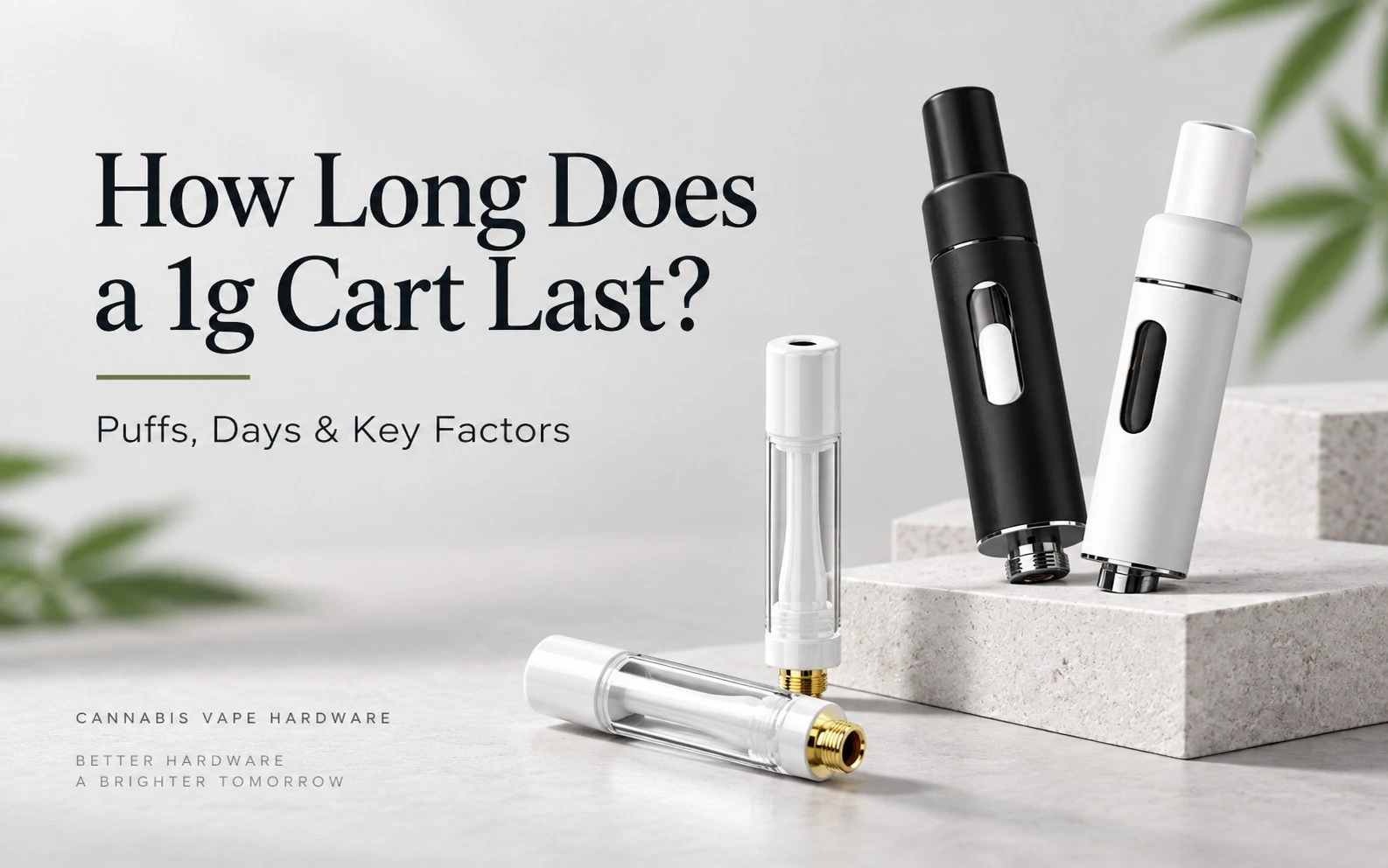
How Long Does a 1g Cart Last?
A 1g cart contains 1,000 mg of cannabis oil by weight. That tells you how much oil is filled into the cartridge, but it does not tell you exactly how many days the cart will last.
A useful working estimate is 160–320 puffs per 1g cart, assuming draws of roughly three seconds. Longer pulls consume more oil per puff, while shorter pulls generally consume less. This is why puff count should be treated as an estimate rather than a fixed specification.
For a quick reference:
|
Daily Use |
Estimated 1g Cart Life |
|
2–3 puffs/day |
Several weeks to a few months |
|
5 puffs/day |
About 32–64 days |
|
10 puffs/day |
About 16–32 days |
|
30 puffs/day |
About 5–11 days |
|
50 puffs/day |
About 3–6 days |
|
80–100 puffs/day |
About 2–4 days |
These numbers assume similar puff length and hardware behavior. In actual use, two people taking the same number of puffs per day can still empty their carts at different rates.
How Many Puffs Are in a 1g Cart?
The simplest way to estimate a 1g cart puff count is to look at how much oil is vaporized per draw.
A 1g cartridge contains 1,000 mg of oil. A typical puff may consume roughly 3–6 mg of oil, depending on draw length and hardware output.
That gives a useful working range:
- At 3 mg per puff: about 333 puffs
- At 4 mg per puff: about 250 puffs
- At 5 mg per puff: about 200 puffs
- At 6 mg per puff: about 167 puffs
This is why a practical estimate of roughly 160–320 puffs per gram works well for most discussions. For a deeper comparison of cartridge capacity and draw count, see our guide to how many puffs are in a 1mL THC vape cartridge.
The calculation is simple:
Estimated total puffs = 1,000 mg ÷ oil consumed per puff
Then:
Estimated days = total puffs ÷ daily puffs
If someone averages 10 puffs per day:
- 160 ÷ 10 = 16 days
- 320 ÷ 10 = 32 days
That gives an estimated lifespan of 16–32 days.
The important detail is that a puff is not a standardized unit. A short two-second inhale and a long five-second pull may both be called one puff, but they do not consume the same amount of oil.
How Long Does a 1g Cart Last Based on Daily Use?
Daily consumption gives a more useful answer than labels such as "light," "moderate," or "heavy," because those terms can mean very different things from one person to another.
Light Use: 2–5 Puffs Per Day
At only 2–3 puffs per day, a 1g cart can last well over a month and, in some cases, several months.
At 5 puffs per day, the same 160–320 puff range gives roughly:
32–64 days
For people who use cartridges this slowly, storage conditions can become almost as important as daily consumption. Heat, air exposure, and long storage periods can affect oil quality before the cart is completely empty.
Regular Use: Around 10 Puffs Per Day
Ten puffs per day is a useful middle-ground example because the math stays straightforward.
A 1g cart at this pace generally lasts:
16–32 days
This is also a practical baseline for brands or dispensaries explaining expected cartridge life to consumers, provided the puff length and power setting remain reasonably consistent.
Heavy Use: 30–100 Puffs Per Day
Once consumption reaches dozens of puffs per day, cartridge life becomes much shorter.
At 30 puffs per day, a 1g cart may last about 5–11 days. At 50 puffs per day, that falls to roughly 3–6 days. Users taking 80–100 puffs per day may finish a 1g cart in around 2–4 days.
The range becomes wider as usage increases because long pulls, high output, and repeated draws can change oil consumption substantially.
What Affects How Long a 1g Cart Lasts?
Daily puff count explains a large part of cartridge lifespan, but it is only one variable. Draw style, heating power, oil formulation, and hardware design all change how much of the 1g fill is consumed per session.
Puff Length and Draw Intensity
Longer draws vaporize more oil.
A controlled two- or three-second pull will generally use less concentrate than a five-second draw at the same power setting. Harder pulls can also change airflow and oil movement inside the cartridge.
For this reason, two users taking 10 puffs per day may still consume very different amounts of oil.
Voltage, Resistance, and Heating Power
Voltage has a direct effect on vapor production, but coil resistance also matters.
The electrical relationship between voltage, resistance, current, and power follows basic Ohm's law and power principles, which are explained in more detail by HyperPhysics' overview of voltage, resistance, and electrical power.
A 2.8V setting on a 1.2Ω coil does not behave the same way as 2.8V on a 1.8Ω coil. In practical vape hardware, resistance changes how much heat is generated at a given voltage.
In general, lower power within the manufacturer's recommended operating range produces smaller vapor volume per draw and may slow oil consumption. Higher power usually creates denser vapor and consumes more oil per puff.
There is no universal "best voltage" for every 1g cart.
For a more technical explanation, see how resistance affects cannabis vape hardware.
Oil Viscosity and Formulation
Cannabis oil viscosity changes with formulation and temperature.
Distillate, live resin, and live rosin can behave differently depending on terpene content, cannabinoid composition, processing, and storage conditions. Cold oil usually flows more slowly. A formulation with different viscosity may also require a different intake structure or heating profile.
This matters because oil must reach the heating area at the right rate. If oil delivery is too slow, vapor output can become inconsistent. If flow is excessive for the hardware, flooding and leaking become more likely.
For that reason, hardware should be matched to the actual formulation. Brands working with terpene-rich extracts can review hardware developed specifically for live resin oil or live rosin rather than assuming the same configuration will perform equally well with every oil.
Cartridge and Coil Efficiency
The same 1g fill does not always produce the same usable output across different hardware.
Ceramic core size, intake geometry, airflow, heating consistency, and tank structure all affect how efficiently oil reaches the heating surface. Well-matched ceramic heating can support more consistent vaporization and reduce issues such as weak vapor or burnt taste.
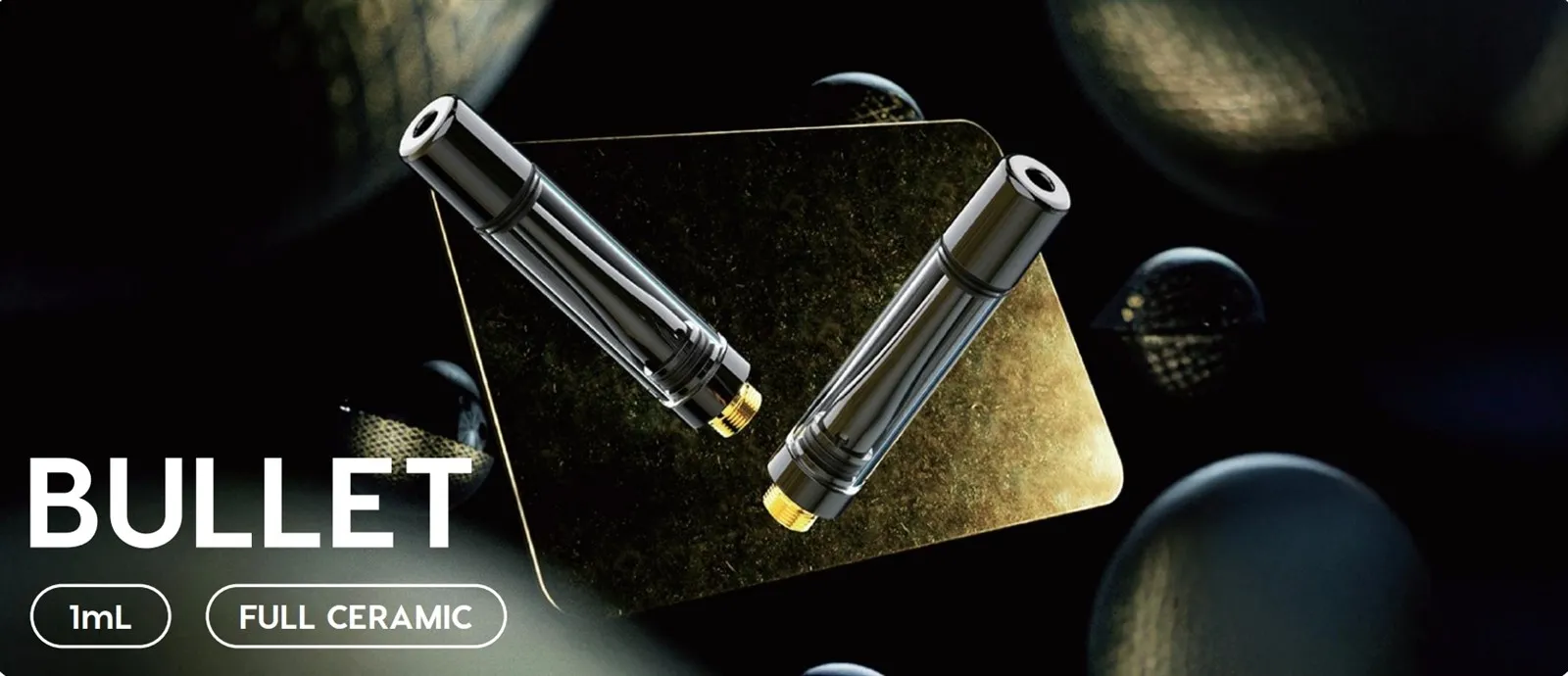
A 1mL full ceramic vape cartridge, for example, uses a different internal structure from many conventional metal-center-post designs. That difference can change heat transfer, oil contact, flavor performance, and residual oil behavior.
Intake sizing matters as well. Openings that are poorly matched to the oil can contribute to flooding, slow wicking, or unstable performance. Anti-clogging airflow design also matters because users often compensate for a clogged airway by taking longer and harder draws.
In practical terms, oil consumption and oil utilization are related but different. The user determines how much oil is requested through each draw. The hardware determines how efficiently that oil is delivered and vaporized.
Why Does My 1g Cart Run Out Fast-or Still Have Oil Left?
A cartridge that appears to run out early is not always consuming every milligram through normal vaporization.
Clogging and Poor Oil Flow
Clogging restricts airflow and often leads to longer, stronger pulls. Thick oil, cold temperatures, and poor wicking can also keep oil from reaching the heating core efficiently.
High-viscosity cannabis oils may flow poorly at lower temperatures, especially after the device has been sitting unused. Oil can also remain on the tank wall instead of reaching the heating area.
In that situation, visible oil remains in the cartridge, but vapor production falls.
Leaking or Flooding
Oil that leaks into the airflow path or out of the cartridge is lost without becoming useful vapor.
Flooding can also disturb normal heating and make the user take repeated draws trying to restore performance. Poorly matched intake size, heat exposure, or seal performance can all contribute.
For a deeper look at this failure mode, see what causes leaking in cannabis vape hardware.
Residual Oil and Tank Design
Some residual oil is common near the end of a cartridge's life.
Oil may remain on the wall, below the effective intake area, or in spaces the heating system can no longer access efficiently. Cartridge geometry strongly influences how much residual oil remains visible.
Postless structures are one approach used to change the internal oil path and heating architecture. A postless vape cartridge removes the conventional central metal post and can provide a different oil-contact and tank layout.
This is an important distinction:
Filled oil and usable oil are not always exactly the same amount.
A well-designed cartridge aims to minimize that gap.
0.5g vs. 1g vs. 2g Carts: How Does Size Change Lifespan?
Cartridge size changes how much oil is available, but puff count does not always scale perfectly because different devices may use different coils, power settings, and airflow designs.
|
Cart Size |
Practical Usage Comparison |
|
0.5g |
Roughly half the oil of a 1g cart |
|
1g |
About 160–320 typical puffs |
|
2g |
Roughly twice the oil capacity of a 1g cart, depending on hardware |
A 0.5g cartridge is commonly estimated at around 80–160 puffs under the same usage assumptions applied to a 1g cart.
A 2g device carries roughly twice the oil capacity, but it should not automatically be described as delivering exactly twice the puff count. Large-capacity all-in-one hardware may use a different ceramic core, battery output, airflow system, or vapor production profile.
Capacity tells you how much oil is available. Hardware still determines how that oil is used.
For brands evaluating conventional cartridge formats, ASM VAPE also offers a range of cannabis vape cartridges for different oil types and hardware configurations.
How to Make a 1g Cart Last Longer
The most effective way to extend a 1g cart lifespan is to control how much oil is vaporized per session and keep the cartridge operating efficiently.
Shorter, controlled draws are usually more efficient than unnecessarily long pulls. Use the cartridge within its recommended voltage range instead of automatically increasing power for larger clouds. If the oil needs time to re-saturate the heating area, avoid repeated chain-hitting.
Storage also matters. Keep carts upright when possible and away from direct sunlight, hot cars, or other high-temperature environments. If a cartridge becomes very cold and the oil thickens, allow it to return toward room temperature naturally instead of applying strong direct heat.
Keeping battery contacts and airflow areas clean can also prevent weak connections from being mistaken for an empty cartridge.
A practical guideline is to leave roughly 15–30 seconds between repeated draws when the hardware and oil need time to re-saturate. The exact recovery time depends on viscosity, intake design, and heating structure.
For cannabis brands, extending usable cartridge life also means reducing oil waste through better hardware matching. A cartridge that resists clogging, limits leaking, and delivers oil consistently is more likely to use its 1g fill effectively from the first draw to the last.
For broader background on cannabis use and vaping-related health considerations, the U.S. National Institute on Drug Abuse provides an overview of cannabis health and vaping information.
FAQ
Is 1g the Same as 1mL?
No.
A gram (g) measures mass. A milliliter (mL) measures volume.
Cannabis hardware is often described by tank volume, while packaged oil may be sold by weight. In practice, 1g and 1mL may appear close for some cannabis oils, but they are not mathematically interchangeable because the relationship depends on oil density.
How Long Does a 1g Cart Last Unopened?
Storage life is different from usage life.
Unopened distillate cartridges can retain acceptable quality for a long period when properly stored, while terpene-rich oils may have a shorter quality window. Heat, light, oxygen exposure, formulation, and packaging all influence shelf life.
Once a cart has been opened and used, flavor and oil quality can gradually change over time. Manufacturer-specific storage guidance should take priority when available.
Does Oil Type Change How Long a Cart Lasts?
Yes, but usually indirectly.
Oil formulation affects viscosity, vaporization behavior, flavor, and the hardware configuration required for stable performance. Daily puff count and draw duration still have the most direct influence on how many days a cart lasts.
A live resin, live rosin, or distillate cartridge can all perform well when the heating system, intake structure, and power settings are matched to the oil.
Why Does a New 1g Cart Not Look Completely Full?
Visual fill level can vary because of tank geometry, headspace, glass thickness, and oil absorbed into the heating or wicking area.
Headspace allows room for oil expansion as temperature changes, while internal components may hold some oil before the first draw. A cartridge that looks slightly less than full therefore does not automatically indicate an underfill.
Exact fill weight should be evaluated by weight or controlled filling data, not appearance alone.
Final Answer: How Long Does a 1g Cart Last?
For most users, a 1g cart can be expected to provide roughly 160–320 typical three-second puffs. At 10 puffs per day, that means about 16–32 days. At very light usage it may last for several weeks or months; at 80–100 puffs per day, it may be finished in only 2–4 days.
Daily use sets the basic timeline. Draw length, voltage, resistance, oil viscosity, clogging, leaking, and cartridge efficiency explain why real-world results vary.
ASM VAPE develops cannabis vape hardware around oil compatibility, ceramic heating, airflow, intake design, and stable vaporization. If your brand is evaluating a 1g cartridge or needs hardware matched to a specific distillate, live resin, live rosin, CBD, or Delta formulation, contact our team to discuss the oil and performance requirements for your next project.
![How to Choose Vape Hardware for Delta 9 Oil [2026 Guide]](/uploads/43868/info/n20260923113103fe52e.jpg)