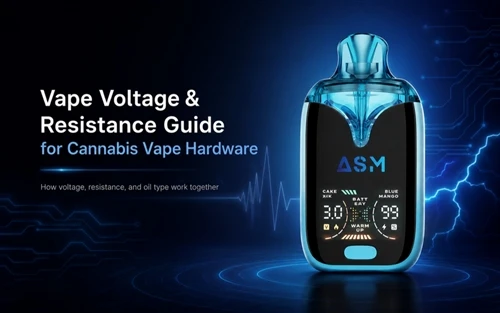
In most cases, you can bring disposable vapes on board, but they must be placed in your carry-on luggage or kept on your person. They are not allowed in checked baggage, and they cannot be used or charged during the flight.
These rules exist to ensure aviation safety. Disposable vape devices typically contain lithium batteries, and the Transportation Security Administration (TSA) and Federal Aviation Administration (FAA) require such devices to remain in the cabin so that any incidents can be addressed immediately. In addition, any vape that contains liquid is also subject to TSA's liquid restrictions. Keep reading to learn more.
Carry-On vs. Checked Luggage Rules
Carry-On Bag (Allowed and Recommended):
- Turn it off: If your device has a button, shut it down completely. For draw-activated disposables, sealing them in their packaging or using a protective cap works well.
- Prevent misfiring: Store them in a small case or hard-shell container instead of tossing them loosely into a backpack with keys or power banks.
- Avoid leaks: Pressure changes in the cabin can sometimes cause minor condensation or leaks. Slip your vapes into a resealable plastic bag just in case.
- Spare batteries: If you also carry rechargeable devices, remember that spare lithium batteries must be in carry-on only, with their terminals taped or in protective cases.
Checked Luggage (Strictly Prohibited):
Disposable vapes - and all e-cigarettes - are banned from checked baggage. The cargo hold isn't a safe place for lithium batteries. If one were to overheat or go into thermal runaway, it could be catastrophic. That's why airlines and regulators insist these devices stay in the cabin.
Why Are Disposable Vapes Restricted?
Lithium Battery Risk
Every disposable vape contains a lithium-ion battery. While small, these batteries can still fail under certain conditions. The FAA highlights that e-cigarettes have been one of the most common causes of lithium battery incidents on aircraft. Rules therefore require:
- Carry-on only
- No charging on board
- Battery size must remain under 100Wh (or under 2g lithium content, though disposables are usually far below this limit)
By keeping devices in the cabin, crew members can quickly respond if something goes wrong.
Liquid Rules (TSA 3-1-1)
Even though disposables come pre-filled, they still fall under the 3-1-1 liquid rule: containers must be 3.4oz (100ml) or less, packed in one quart-sized, clear, resealable bag, and limited to one bag per passenger. If you carry small e-liquid bottles, pack them with your toiletries so security screening goes smoothly.
Restrictions During the Flight
Once on board, the rule is clear: you cannot use or charge your vape. This is not just airline policy - it's federal law.
- Using a vape is treated the same as smoking, and it's banned on all flights.
- Charging your vape or batteries is also prohibited, since even plugging it in can be seen as "use."
- Penalties can be severe: fines, confiscation, or even criminal charges. In extreme cases, flights have been diverted because someone refused to stop vaping.

Quantity Limits and Airline Differences
The TSA does not publish a strict limit on how many disposable vapes you can carry. However, airlines often set their own rules, especially when lithium batteries are involved. In practice, most carriers allow around 10 to 20 disposable vapes for personal use, provided they are stored safely in your carry-on bag.
Here are some examples:
- British Airways: Up to 15 lithium battery–powered devices are permitted in hand luggage.
- Ryanair: Allows up to 20 disposable vapes in carry-on.
- Virgin Atlantic and easyJet: Do not specify an exact number, but expect passengers to carry only reasonable personal-use amounts.
As a general rule, if you're packing more than a handful of devices, you should expect questions at security. Carrying 10–20 for personal use is usually fine, but large quantities may raise suspicion of commercial intent.
International Travel and Destination Rules
Rules change dramatically once you leave the U.S. or Europe. Some countries treat disposable vapes as ordinary consumer products, while others ban them outright. Before traveling abroad, always check local regulations.
Completely banned
Thailand, Singapore, India, and the Philippines. Possession can lead to heavy fines or even jail time.
Strictly restricted
- Australia: Nicotine vapes require a prescription.
- Japan: Only nicotine-free devices are legal.
- EU countries: Allow vaping but enforce rules on nicotine strength (typically max 20mg) and bottle size.
Standard regulation
The UK, U.S., France, South Africa, and many others permit personal use, but travelers should still follow quantity limits and local nicotine caps.
If your destination bans vaping products, it's safer not to bring them at all. Confiscation is the best-case scenario - in some countries, even possession can have legal consequences.
FAQ
Q: Can I bring a disposable vape through TSA?
A: Yes, but it must be in your carry-on or on your person, never in checked luggage.
Q: Can I vape in an airport?
A: In most airports, no. Only a few have designated smoking areas, usually located outside security checkpoints.
Q: Can I charge my vape on a plane?
A: No. Charging a vape on board is prohibited and could get you into trouble.
Q: Can TSA confiscate disposable vapes?
A: If you pack them incorrectly (e.g., in checked baggage) or carry them where they are banned, yes - they may be confiscated.
Q: How many disposable vapes can I bring?
A: Typically 10–20 devices are acceptable for personal use, depending on the airline. Always check their rules.
Q: What if I'm under 18?
A: Traveling with a vape as a minor can be risky. TSA officers may confiscate it, and in some destinations, carrying one underage could create legal issues.
Conclusion
So, can you take disposable vapes on an airplane in 2025? Yes - but only in your carry-on, never in checked luggage, and never for use during the flight.
To travel safely and avoid fines or confiscation:
- Turn devices off and keep them protected in your carry-on.
- Pack e-liquids under 100ml in a clear resealable bag.
- Stick to a personal-use quantity, usually no more than 10–20 vapes.
- Double-check your airline's website and your destination country's laws before flying.
Source:
Federal Aviation Administration (FAA) - https://www.faa.gov/hazmat/packsafe/lithium-batteries
TSA - https://www.tsa.gov/travel/frequently-asked-questions/liquids-aerosols-and-gels-rule